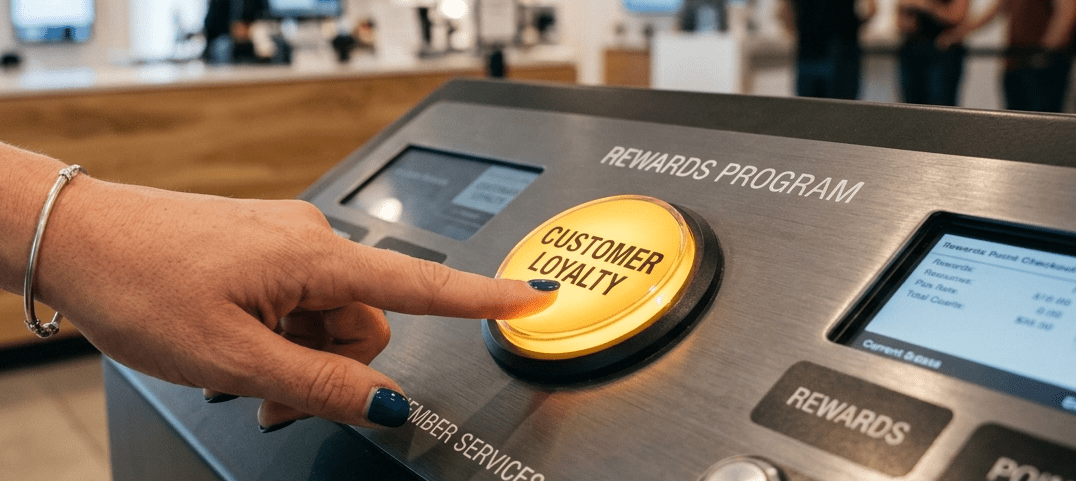
Here’s the raw number: $879 million. That’s the price Adyen, the behemoth payments platform, is willing to pay for Talon.One, a company whose core business is enterprise loyalty, promotions, and incentives. This isn’t just a minor tuck-in acquisition. It’s a calculated move to fundamentally reposition Adyen, pushing it beyond the familiar rails of payment processing into something far more ambitious: a real-time decisioning engine, embedded directly into the very act of commerce.
The implications here ripple outward. For years, the holy grail for merchants has been to truly know their customer across all touchpoints and, crucially, to act on that knowledge in the fleeting moments of a purchase decision. Most have struggled. They gather data, sure, but operationalizing it to dynamically adjust pricing, offer personalized discounts, or recognize a VIP customer before the checkout is finalized? That’s been a pipe dream, a fragmented mess of disconnected systems. Talon.One’s integration aims to change that, knitting together identity, pricing, and promotions so tightly that they can be orchestrated on the fly, even within the increasingly sophisticated, AI-driven shopping experiences that are rapidly emerging.
Why Now? The Accelerating Arc of Agentic Commerce
This acquisition arrives at a critical juncture. The chatter around agentic commerce — where AI agents autonomously navigate online stores, compare options, and execute purchases on behalf of consumers — is no longer just futurist speculation. It’s becoming a tangible reality. In such an environment, the ability to present the right offer, at the right price, to the right customer, at the precise millisecond of a potential transaction, isn’t just a competitive advantage; it’s table stakes.
Adyen’s stated goal, as articulated by Co-CEO Ingo Uytdehaage, is to empower merchants to “recognize a shopper and apply a relevant offer instantly, before the payment is completed, ultimately driving higher revenue.” This isn’t hyperbole; it’s a direct response to a market demand that has been echoing for years. Companies have thrown money at CRMs, loyalty programs, and marketing automation tools, only to find that the insights generated often arrive too late to influence the actual transaction. The beauty of Talon.One’s tech, and by extension Adyen’s new offering, lies in its ability to operate at the transaction’s edge, acting with the immediacy that AI-powered agents and discerning consumers now demand.
“Joining Adyen allows us to embed real-time decisioning at the core of every transaction,” said Talon.One Co-founders Christoph Gerber and Sebastian Haas. “Together, we enable merchants to connect customer identity with pricing and promotions in real time, in-store and online, driving better outcomes for our customers.”
This isn’t just about incremental improvements in conversion rates. It’s about rearchitecting the transaction itself. Imagine a scenario: a loyal customer browses online, adds items to their cart, but hesitates. Their personal AI shopping agent nudges them. Simultaneously, Adyen, now fused with Talon.One’s intelligence, recognizes this shopper. It checks their purchase history, their loyalty tier, and ongoing promotional campaigns. Before the agent can even signal a potential abandonment, a perfectly tailored offer — perhaps a small discount on an add-on item, or a loyalty points bonus — is presented, dynamically adjusted to be irresistible. This is the kind of granular, real-time orchestration that Adyen is betting on.
Beyond Payments: A Shift to Orchestration
Historically, Adyen has excelled at providing a strong, global payments infrastructure. They’ve been the plumbing, essential but largely invisible, that allows money to move. This acquisition signals a deliberate move to become the central nervous system of commerce. By ingesting and processing not just payment data but also rich customer identity and promotional logic, Adyen is positioning itself as a strategic partner, not just a utility provider.
The $879 million price tag, while substantial, reflects the perceived value of this strategic pivot. It’s a premium for access to a market where intelligence and action are inextricably linked. It’s also a clear signal to competitors. Companies like Stripe, PayPal, and Square will undoubtedly be watching closely, assessing their own strategies for moving beyond pure payment processing into areas that offer deeper merchant value. The competitive landscape for financial technology is not just about speed and cost of transactions anymore; it’s about intelligence, personalization, and the ability to influence behavior in real time.
The acquisition is expected to finalize in the second half of 2026. This gives Adyen ample time to integrate Talon.One’s technology, which currently powers over 300 brands, including household names like Nordstrom and H&M. The question isn’t whether this integration will be complex — it will be. The real question is how effectively Adyen can abstract this complexity, offering merchants a simplified interface to harness this powerful real-time decisioning capability. If they succeed, they won’t just be processing payments; they’ll be orchestrating the future of retail.
What this means for developers is a new layer of complexity and opportunity. Building applications that can tap into this real-time decision engine will require a different kind of architecture, one that prioritizes low-latency interactions and dynamic data flows. The promise of personalized commerce, once a distant aspiration, is now being engineered into the very fabric of transaction processing.
🧬 Related Insights
- Read more: Grayscale’s Altcoin Bet: Resilience Amid Rockets and Rate Hikes
- Read more: FBI Tallies $11 Billion in Crypto Scams: America’s Wallet Just Got Pickpocketed
Frequently Asked Questions
What does Talon.One actually do? Talon.One provides the backend infrastructure for businesses to manage customer loyalty programs, create personalized promotions, and optimize incentive offers. It allows brands to define complex rules for discounts and rewards based on customer behavior, purchase history, and other data points.
Will this acquisition change how I pay for things? Likely not directly in the short term for the average consumer. For merchants, however, it means they’ll have more sophisticated tools to offer personalized discounts and loyalty rewards dynamically at the point of sale, potentially leading to more tailored shopping experiences and offers.
Is Adyen entering the CRM space? Not directly. While Adyen is integrating customer identity and behavior data with Talon.One, its focus remains on transactional and promotional intelligence rather than full-suite customer relationship management. They are building a decisioning layer around the transaction, informed by CRM-like data.