“Hi, my name is Peter, and I’m a Claudeholic.”
Seriously? That’s the opening salvo. August 2025, London. Peter Steinberger, addressing a meetup called Claude Code Anonymous. His affliction? Coding tools, specifically Anthropic’s Claude Code. He apparently dedicates “pretty much all my waking time” to it. And it’s still not enough. Some people have real hobbies.
Then came Opus 4.5. More complex tasks. More memory. Longer run times. It even manages AI subagents. Anthropic’s take-home exam for engineers is, by their own admission, “notoriously difficult.” Opus 4.5 scored higher than any human candidate ever. Questions raised? You bet. About the future of engineering. About the future of humans. About whether we’re all just destined to become digital indentured servants.
Coders spent their holidays in basements, playing with a toy that lets them build software like they’d unleashed a hundred clones. Or superpowers. One guy said it feels like becoming Spider-Man. Cute.
For Steinberger, that wasn’t enough. His tool, OpenClaw, arrived midwinter. It conjures personal AI agents. Exploits Claude Code. Or other coding tools. Give it your data. Your apps. Maybe your credit card. It scours your cloud. Ventures onto the web. Does your bidding. Runs autonomously. Overcomes obstacles with Terminator-level persistence. His project? 100,000 GitHub stars in under two weeks. 366,000 by May. Because of course it did.
So here we are. The age of AI agents has dawned. For the technically proficient. And the foolhardy. The ones willing to dive headfirst into this messy, imperfect, risky adventure. “AGI is here!” one fanatic declared. “It’s just not evenly distributed.” Sounds about right. Like a luxury yacht at the bottom of the Mariana Trench.
Remember the 1980s computer revolution? Public curiosity mixed with angst. Hackers building stuff. Now? Same dynamic. Possibly more at stake. Thomas Reardon, ex-Microsoft and Meta, calls it “the most underrated, massive release I’ve experienced in technology.” High praise. Or a desperate plea.
Marc Andreessen, bless his techno-optimist heart, says it’s “almost inevitable that this is the way people are going to use computers.” The unspoken part: It won’t be a choice. Enjoy your new overlords.
Boris Cherny. Instagram tech lead. Rural Japan. Biking to the farmers market. Making miso. Pickling things. Trading with neighbors. Then he played with AI models. From his former hometown. San Francisco. Suddenly, the idyllic life wasn’t enough. Anthropic called. He moved back to the Bay Area.
An engineer named Adam Wolff showed Cherny the automated coding. “Very primitive,” Wolff says. Cherny used it for a pull request. Merging new code. “It wasn’t a good PR,” Wolff admitted. But it proved the concept. Good pull requests. Higher-level coding tasks. Automated. Soon.
Cherny set out to make it happen. OpenAI and Microsoft had their coding products since 2021. Codex. Made programmers more productive. But limited. Required supervision. Cherny imagined an upgrade. A model that understood programming architecture. The wherewithal to solve problems. What Cherny and his colleagues are building is not just an upgrade. It’s an existential threat to the current model of software development.
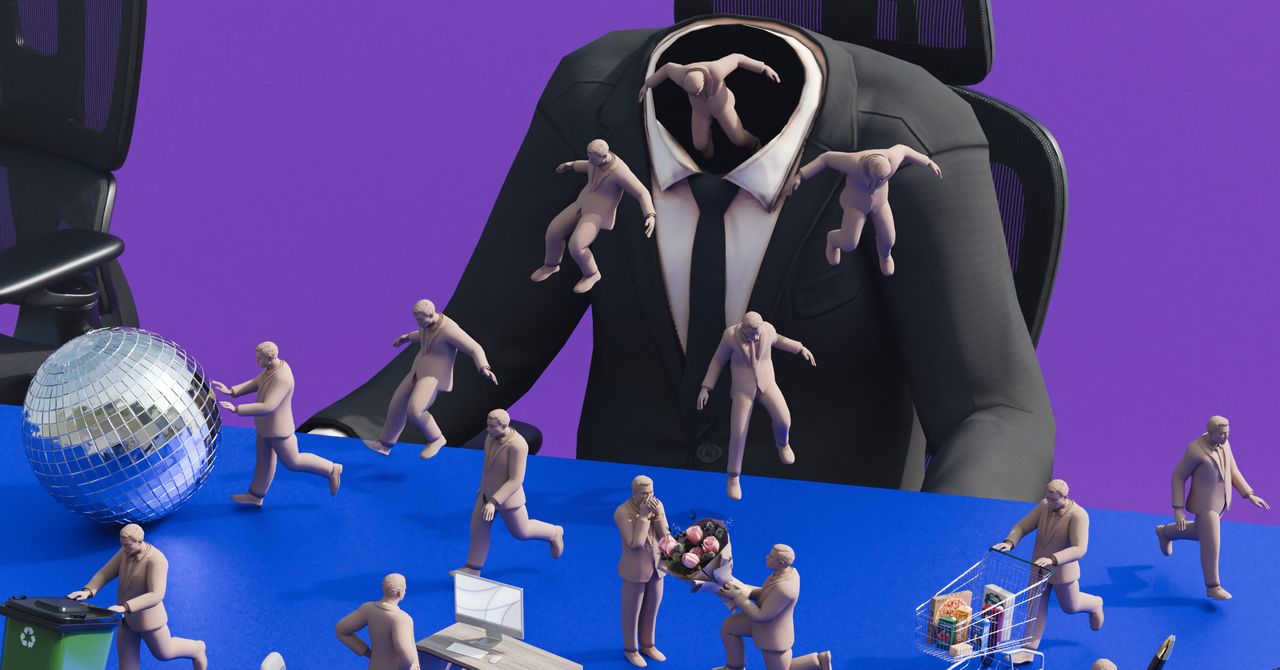
The AI agents here are not just assistants. They are autonomous entities. Capable of independent action. Problem-solving. And learning. The implication is staggering. Coders who once spent weeks on a single feature can now oversee an AI agent that churns it out in hours. This isn’t about productivity gains anymore. It’s about fundamental shifts in how value is created. And who benefits.
This isn’t science fiction. This is today’s reality. The tools that were once science fiction are now available to anyone with a laptop and a subscription. And the results are, frankly, terrifying if you’re invested in the old way of doing things. The chaos isn’t an accident. It’s the inevitable outcome of unleashing capabilities that outpace our current societal and economic structures. We built it. Now we have to live with it. Or try to.
Is This the End of Human Coders?
Let’s not get dramatic. Not yet. But the writing is on the wall. If your job is to write boilerplate code, to debug simple errors, or to translate requirements into functional scripts, then yes, your job is probably on the line. The AI models are getting incredibly good at those tasks. They’re faster, cheaper, and frankly, more patient than most humans. The coders who will thrive are those who can manage these AI agents, design complex systems, and tackle truly novel problems. Think of it as moving from being a bricklayer to being an architect. Still building, but at a vastly different level.
Why Are AI Agents Causing So Much Chaos?
Chaos is, in many ways, the point. For the early adopters, it’s an exciting free-for-all. For the established order, it’s a destabilizing force. The speed at which these agents are developing is unprecedented. They can learn, adapt, and even collaborate with each other. This means that established workflows, business models, and even entire industries can be disrupted overnight. The “chaos” is simply the friction of an old system trying to grapple with a new, vastly more powerful one. It’s the sound of disruption. Loud disruption.
What Does This Mean for Traditional Software Development?
It means everything. The traditional model, where human developers meticulously craft every line of code, is facing an existential crisis. AI agents can now handle significant portions of the development lifecycle, from requirements gathering and design to coding and testing. This doesn’t mean developers are obsolete; rather, their role is evolving. They will become more like orchestrators, supervisors, and problem-solvers at a higher level. The focus shifts from writing code to directing its creation. It’s a paradigm shift, plain and simple. Those who don’t adapt will be left behind.
The Great Code Migration
We’re seeing a migration. Not of people, but of tasks. The grunt work, the repetitive coding, the basic debugging – these are all migrating to AI agents. What remains for humans is the truly complex, the creative, the strategic. It’s like the industrial revolution for software. Machines are doing the heavy lifting, freeing humans for… well, for whatever humans are still good at. Let’s hope it’s enough.
The Rise of the ‘Claudeholics’
The term “Claudeholic” itself speaks volumes. It’s an addiction. A dependence on these AI tools. It highlights the seductive power of AI that can seemingly do our work for us. This isn’t just about efficiency; it’s about a fundamental change in the human-computer relationship. We’re outsourcing cognitive tasks at an alarming rate. And for some, it’s become an all-consuming pursuit.
“It feels like becoming Spider-Man,” one coder told me.
Indeed. A superpower that might just consume its user.
Historical Parallel: The Dawn of the Personal Computer
This feels eerily similar to the early days of the personal computer. Skepticism from established institutions, excitement from early adopters, and a rapid, almost uncontrolled proliferation of new tools and applications. Just as the PC democratized computing power, AI agents are democratizing complex software development. The difference? The speed and scale. The PC revolution took years. This one feels like it’s happening in months, not years.
A Word on Corporate Spin
When companies like Anthropic boast about their AI scoring higher than human candidates, it’s easy to see the PR angle. They want to highlight their achievements. But let’s not forget the context. This is a single, albeit impressive, benchmark. The “chaos” isn’t just about AI being “better.” It’s about the unforeseen consequences of unleashing such powerful tools into a world not quite ready for them. The real story isn’t just the benchmark score; it’s the societal and professional upheaval it foreshadows.
🧬 Related Insights
- Read more: Stablecoins Get Green Light: But Real Adoption Still Faces Hurdles
- Read more: Bitcoin ETFs Gobble $471M—Price Goes Nowhere
Frequently Asked Questions
What is a Claudeholic?
A “Claudeholic” is a term for someone who is overly reliant on or addicted to AI coding tools, such as Anthropic’s Claude Code.
Will AI agents replace all programmers?
It’s unlikely that AI agents will replace all programmers. The role of programmers is expected to evolve, focusing on higher-level design, system architecture, and managing AI agents, rather than writing basic code.
How did AI agents cause chaos in the tech world?
AI agents caused chaos by rapidly automating complex tasks, disrupting traditional workflows, and creating a sense of uncertainty and rapid obsolescence within the tech industry.