Ever wonder why your bank app demands a fresh selfie just to change your address?
Alloy President Laura Spiekerman has the fix: agentic AI that doesn’t just predict fraud — it explains itself, step by auditable step. Financial services demands it. Regulators won’t touch anything less.
Spiekerman, co-founder of the identity risk platform Alloy, isn’t peddling hype. She’s spent over a decade chasing financial inclusion, from microfinance in East Africa to wrangling U.S. onboarding nightmares. Her pitch at the upcoming HumanX AI conference? Agentic AI turns identity infrastructure invisible, letting good customers in while slamming the door on fraudsters.
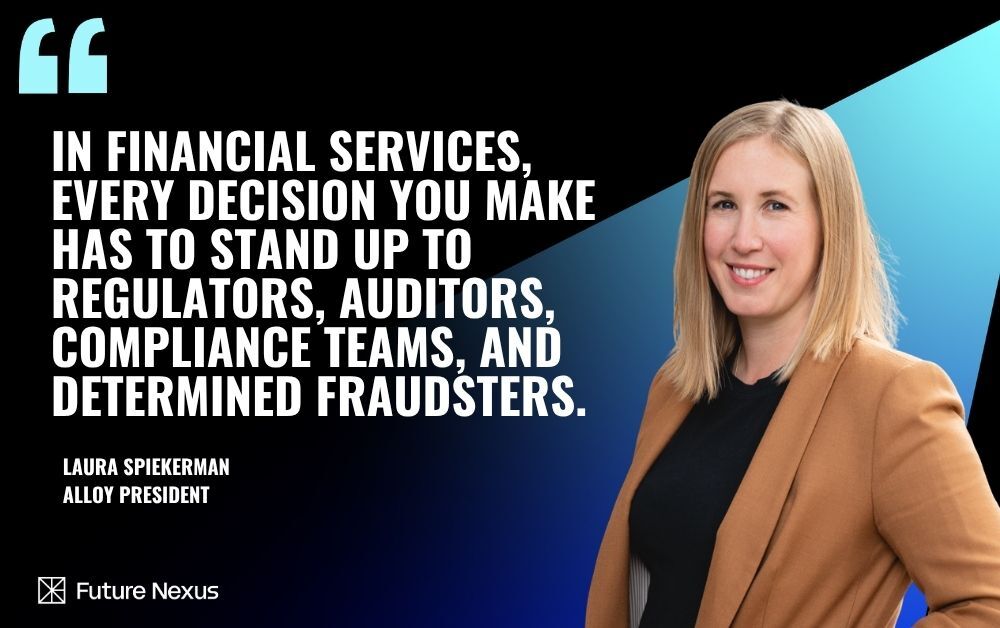
“In financial services, every decision you make has to stand up to regulators, auditors, compliance teams, and determined fraudsters.” – Laura Spiekerman, Alloy
That’s the gauntlet. Ignore it, and you’re toast.
Why Does Fintech Still Struggle with Identity?
Start with the basics. Alloy didn’t birth from compliance boredom. Spiekerman’s college thesis on microfinance led her to M-PESA in East Africa — Venmo for the masses, basically. Phones solved payouts. Identity didn’t.
Back in the U.S., it’s no picnic. Renewing a driver’s license? Agony. For immigrants, youngsters, or credit ghosts? Multiply that by ten. At a payments startup, she saw half of new applicants shunted to manual review over stale addresses or mismatched records. Human error, blocking human progress.
Alloy fixed that. Now, 800+ banks, credit unions, and fintechs rely on its end-to-end platform. One API pulls from 200+ data sources in real time. Onboarding. Logins. Transactions. All unified. No more point-solution Frankenstein.
Results? An SMB lender doubled approvals. A credit union saves $5 per dollar spent on fraud ops. Impressive. But here’s the skepticism: those wins predate the full AI push. Can agentic systems scale without crumbling under audit?
Agentic AI isn’t your sci-fi overlord. It’s policy-driven, traceable, faster than any analyst. Spiekerman contrasts it with black-box models — the kind regulators eviscerate. Alloy’s version documents every move, enforcing rules you set.
Is Agentic AI Ready for Fintech’s Regulatory Hell?
Financial services as AI’s ultimate testbed. High bar. Zero tolerance for opacity. Spiekerman nails it: if it works here, it’ll work anywhere.
But let’s pump the brakes. We’ve heard this before. Remember early blockchain promises? Immutable ledgers would kill fraud, they said. Instead, we got crypto scams and compliance migraines. Agentic AI risks the same hype trap — shiny tech masking incomplete data or edge-case failures.
Alloy’s expanding globally, too. Germany’s video-ID mandates. U.K. push-payment scams. Fragmented regs, spotty data. They invest in local integrations, abstract it into configurable policies. Smart. Customers get battle-tested insights, like U.K. scam defenses prepped for U.S. shores.
Still, global scale amplifies risks. One bad integration, and fraud slips through. Or worse, false positives spike, tanking conversions. Spiekerman’s vision sounds smoothly. Reality? Expect hiccups.
From onboarding to “do anything.” That’s the evolution. Not just first-touch verification. Every lifecycle moment — transact, update info, login. Frictionless foreground, vigilant background.
Unique insight: this mirrors the early internet banking shift. Remember clunky 90s online accounts? Manual KYC, endless faxes. Then came APIs and data orchestration, invisible to users. Alloy’s agentic AI could do the same for identity risk — but only if it dodges the dot-com bust’s overpromise. Prediction: by 2026, half of mid-tier banks adopt similar stacks, or risk losing the conversion war to nimble fintechs.
The Corporate Spin — And What’s Missing
Spiekerman’s no wide-eyed startup kid. Seasoned. Her East Africa stint grounds her. But Alloy’s PR gleams a bit too bright. “Almost invisible” infrastructure? Poetic. Try selling that to a harried compliance officer mid-audit.
Under the hood, AI drives outcomes. Less fraud. Fewer false positives. Higher throughput. Fine. Yet metrics like that SMB doubling approvals feel cherry-picked. Where’s the aggregate data across 800 clients? The fraud loss ratios pre- and post-AI?
And agentic AI’s promise hinges on data quality. 200 sources sound strong — until a key one’s offline. Or biased. Regulators are circling AI ethics now. Alloy better have audits galore.
Global learnings are a side benefit, she says. U.K. regs informing U.S. prep. Noble. But it’s also a moat-builder. Customers lock in, chasing Alloy’s expertise. Classic platform play.
Skepticism aside, Spiekerman’s right on one count. Identity remains the choke point. Phones unlocked distribution. AI might unlock trust.
Panel upcoming: “Building global financial infrastructure from the ground up” at HumanX AI, April 6-9. Worth watching. She’ll unpack more.
Financial services won’t crown AI kings easily. Too much skin in the game. But Alloy’s trajectory — traceable agents, lifecycle coverage, global grit — positions it well. Just don’t bet the farm yet.
🧬 Related Insights
- Read more: Bitcoin Clings to $68K as Trump’s Iran Doomsday Clock Ticks
- Read more: Grayscale’s Altcoin Bet: Resilience Amid Rockets and Rate Hikes
Frequently Asked Questions
What is agentic AI in fintech?
Agentic AI follows explicit policies, documents decisions, and acts autonomously — unlike opaque models. Alloy uses it for fraud detection that regulators can audit.
How does Alloy reduce identity fraud?
Through a single API aggregating 200+ real-time data sources, enabling consistent risk decisions across onboarding, logins, and transactions with minimal friction.
Is Alloy’s platform regulator-proof?
It aims to be, with traceable AI steps. But financial services demands proof under fire from auditors and fraudsters.