The initial reaction to AI’s healthcare invasion was predictable: a flurry of news about chatbots handling administrative tasks or offering basic symptom checkers. The market, for its part, seemed ready to accept incremental improvements, perhaps a more efficient intake form or a slightly faster triage process. What few anticipated was a startup raising substantial capital on the premise that clinical AI agents shouldn’t just be coded, they should be trained — much like a human doctor.
Amigo AI just snagged an $11 million Series A round, led by Madrona and with participation from Optum Ventures. This isn’t about another tool to shuffle paperwork. Amigo is building patient-facing AI agents designed to operate across the clinical workflow, from initial intake and triage to personalized care navigation and round-the-clock support. The objective? To offload high-value clinical tasks from overburdened human teams and extend their reach, all while prioritizing something far more critical than efficiency: safety.
The ‘Digital Residency’ Approach
Here’s the core of Amigo AI’s differentiated strategy: a ‘digital residency’ program. Before any AI agent interacts with a real patient, it undergoes rigorous training in millions of simulated scenarios. These aren’t generic tests; they’re meticulously tailored to the specific patient population and protocols of each healthcare organization. Critically, these simulations are designed to intentionally introduce adversarial cases and edge scenarios — essentially, the AI equivalent of throwing curveballs at a medical intern — until a 100% safety pass rate is achieved. This isn’t just testing; it’s indoctrination into a safe clinical practice.
The market’s appetite for this safety-first, doctor-like training approach appears to be strong. In the last six months alone, Amigo AI reports its agents have handled over three million patient encounters globally without a single safety incident. That’s a compelling data point, particularly in an industry where the stakes couldn’t be higher. Customers like Eucalyptus, Diverge Health, and The Care Clinic are already adopting the platform.
A Personal Mission Fuels Innovation
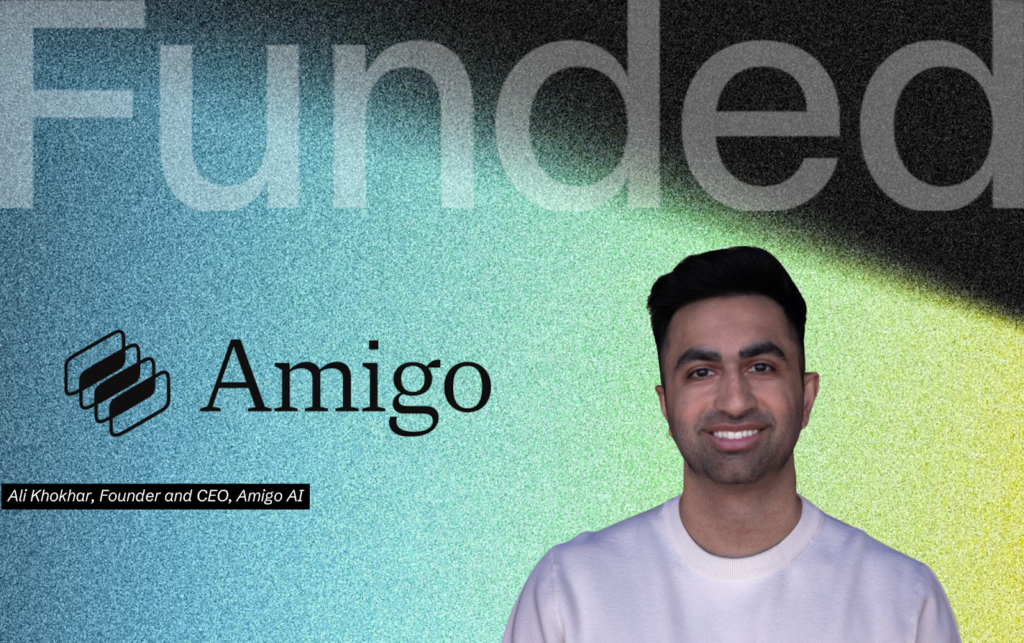
Founder and CEO Ali Khokhar brings a unique perspective, forged by past roles at Upwork Labs building AI-native products and earlier stints on Google’s Ads and consumer growth teams. But his pivot to healthcare is deeply personal. The loss of his mother to breast cancer at a young age serves as a constant reminder of the unforgiving nature of medical care and the absolute necessity for precision and reliability. His stated motivation cuts straight to the heart of the matter:
“AI is transforming every industry it touches, but healthcare has a higher bar. There’s no room for errors or hallucinations, and definitely no second chances with patient lives. We asked ourselves how to make AI safe enough to deliver care. The answer was obvious. Clinical agents need to be trained the same way we train doctors.”
This philosophy underscores a fundamental challenge for AI in high-stakes domains. Traditional AI development often prioritizes speed-to-market and broad applicability. Khokhar’s approach suggests that in clinical settings, the traditional deployment pipeline simply isn’t sufficient. It implies that the very architecture of AI development for healthcare needs to be rethought, moving beyond pattern recognition to something akin to clinical judgment, albeit digitally mediated.
Is This the New Standard for Clinical AI?
The implications of Amigo AI’s funding and methodology are significant. They’re not just selling AI; they’re selling confidence. By building AI agents that undergo a process analogous to medical training, they are attempting to bypass the inherent skepticism surrounding AI in healthcare. If the company can consistently demonstrate this level of safety and efficacy, it could very well establish a new benchmark for how clinical AI is developed and deployed. The addition of Dr. Jay Shah, Chief of the Medical Staff at Stanford Health Care, as Chief Medical Advisor further lends credibility to this medically-centric training model.
This is more than just a funding announcement; it’s a strategic declaration. Amigo AI is betting that healthcare organizations are ready to invest in AI that mirrors the rigor and responsibility of human clinicians, rather than just automating existing workflows. The $11 million injected into Amigo AI is a strong signal that investors believe this safety-first, clinically-aligned training paradigm is the future for AI operating at the sharp end of patient care. We’ll be watching closely to see if this approach scales beyond its initial impressive performance metrics.
🧬 Related Insights
- Read more: What to Watch This Week: Quantum Threats, Wall Street’s Grip, and DAO’s Evolving Landscape
- Read more: Prediction Markets Gamble on Asia’s Gray Zones – Regulators Lurking
Frequently Asked Questions
What does Amigo AI’s ‘digital residency’ mean? It means Amigo AI’s patient-facing AI agents undergo extensive simulated training, mirroring the rigorous process medical professionals go through, to ensure they meet a 100% safety pass rate before interacting with real patients.
How is Amigo AI different from other healthcare AI companies? Amigo AI’s core differentiator is its focus on a deep, medically-aligned training methodology, akin to medical school, rather than simply applying standard AI development practices to healthcare tasks.
Will Amigo AI replace doctors? Amigo AI’s stated goal is to extend the reach of existing care teams and handle high-value clinical tasks, not to replace doctors. It aims to augment human capabilities, freeing up clinicians for more complex patient needs.