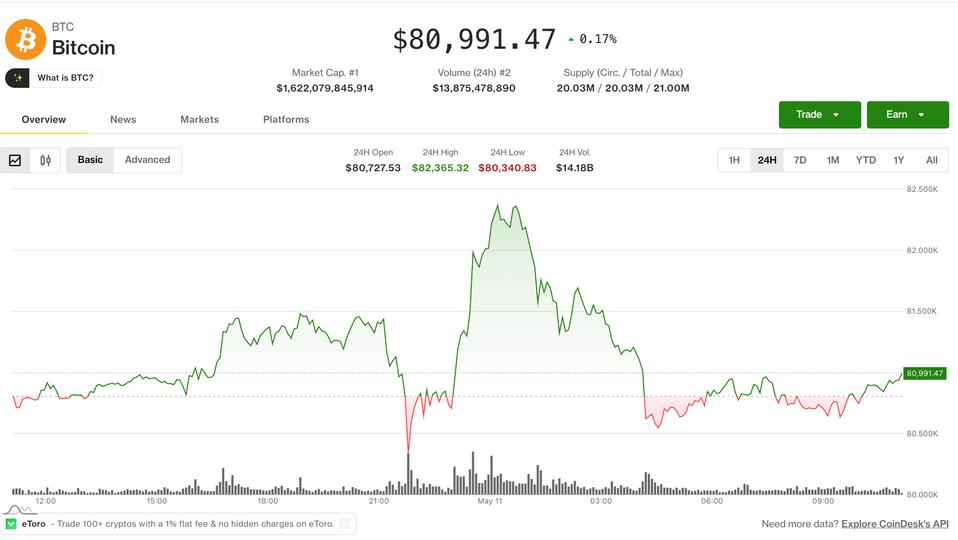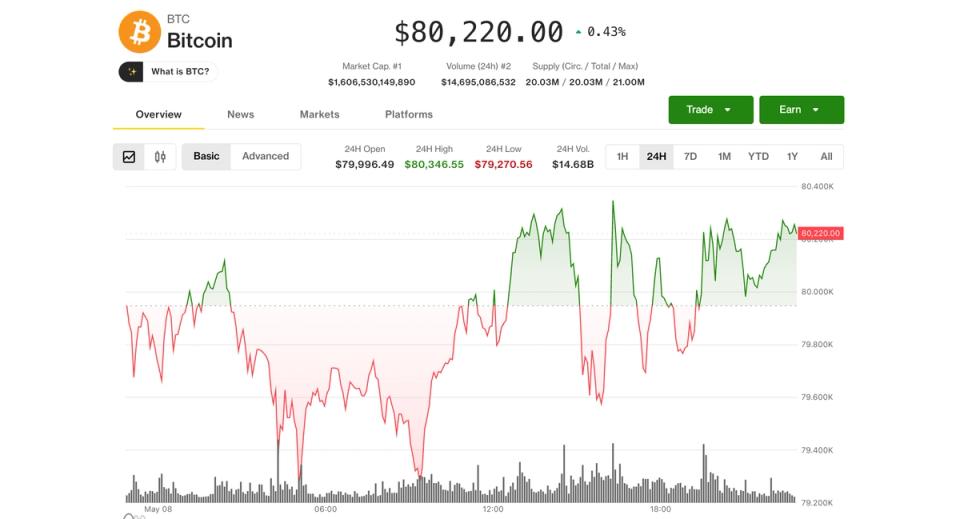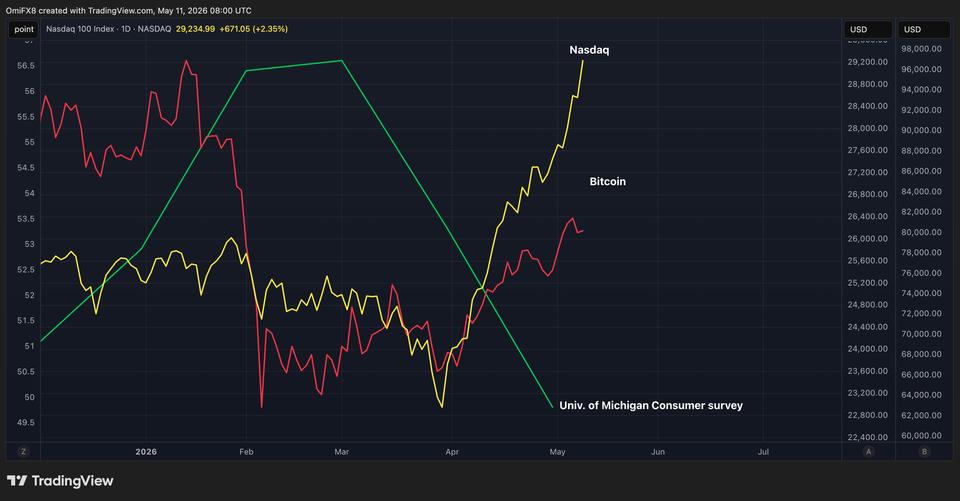
We all expected this, right? The titans of tech, the glint of gold (or in this case, crypto gold), the hum of innovation – all pointing skyward. Wall Street was supposed to be riding a wave of prosperity, and that wave was meant to gently lap onto the shores of Main Street. For weeks, the headlines have screamed of record highs for the Nasdaq, of Bitcoin breaking through psychological barriers like a digital bull through a china shop.
And yet. And always the ‘and yet’. The latest University of Michigan consumer sentiment survey dropped like a lead balloon, painting a picture of dread. We’re talking historic lows, folks. Not just ‘a bit grumpy’, but ‘turn off the lights, the end is nigh’ gloomy. Gas prices, tariffs – the everyday anxieties that gnaw at household budgets. It’s a stark, almost theatrical, contrast: champagne corks popping in financial districts while grocery receipts induce panic attacks elsewhere.
This isn’t just a disconnect; it feels like a seismic shift. The narrative we’ve been sold for years – that market rallies trickle down, that investor confidence eventually uplifts the collective mood – is fraying at the seams. What’s really going on here? It’s as if the engine driving the economic train has been replaced mid-journey, and only certain passengers feel the smooth hum of the new propulsion.
The AI Engine Roars, But Who Gets a Ticket?
Look, the folks at Bitget Wallet, like Alvin Kan, put it plainly. Institutional capital is diving headfirst into AI, semiconductors, and yes, digital assets. These aren’t your grandma’s speculative plays anymore; they’re being priced as the bedrock of future productivity and technological leaps. The Nasdaq’s ascent is powered by this AI capex boom, with mega-cap tech companies reporting earnings that seem plucked from a sci-fi novel. And that energy? It’s spilling over, fueling demand for assets like Bitcoin, especially with those U.S.-listed spot ETFs now pulling in billions.
“Institutional capital continues flowing into AI, semiconductors, and digital assets, pushing the Nasdaq and Bitcoin higher as markets price in long-term productivity growth and technological transformation. At the same time, consumer confidence remains weak as households continue dealing with inflation, high living costs, and economic uncertainty. In effect, markets are trading the future while consumers are still focused on present-day financial pressure.”
It’s a fascinating, albeit unsettling, paradox. The markets are essentially trading in a future built on advanced technology and AI-driven growth, a future that feels tangible and exciting to large capital allocators. Consumers, however, are still very much living in the present, battling the very real, very immediate pressures of inflation and stagnant real wages. It’s like watching a virtuoso pianist play a complex symphony while the audience is distracted by a leaky ceiling.
Has the Democratization Promise Faded?
For so long, the crypto community, and indeed many in the broader tech world, championed the idea of financial democratization. The promise was that these new digital frontiers would level the playing field, offering opportunities to everyone, not just the already wealthy. But here’s the rub: Bitcoin, once the darling of the grassroots movement, is now increasingly tethered to the very traditional financial markets it sought to disrupt. The launch of spot ETFs—a move that brought institutional legitimacy and, frankly, a flood of money—has also tightened its correlation with the Nasdaq.
Markus Thielen of 10x Research nails it. The promise of democratization is fading. Wealth, it seems, remains stubbornly concentrated. The gains from this market rally aren’t being broadly distributed; they’re disproportionately flowing to those who already hold significant assets. This isn’t just about crypto; it’s a more profound trend playing out across the entire U.S. stock market, where the wealthiest participants are reaping the lion’s share of the rewards. This feels like the opposite of what was intended, a powerful, albeit unintended, consequence of institutionalizing innovation.
The AI Platform Shift: A New Era of Inequality?
What fascinates me most here, beyond the immediate economic numbers, is the underlying platform shift that AI represents. We’re not just talking about better software or faster chips; we’re talking about a fundamental reordering of how value is created and captured. When AI becomes the primary engine of productivity, those who own, develop, and deploy that AI stand to capture an exponentially larger share of the economic pie. This is the core of the current divergence. The Nasdaq and Bitcoin rallies are early indicators of capital flowing towards this AI-driven future, rewarding the architects and owners of that future.
My unique insight? This widening gap isn’t merely a cyclical economic phenomenon; it’s the nascent tremors of a structural shift, amplified by AI. We’re seeing the early stages of a world where the primary source of wealth creation is intellectual property and AI infrastructure, rather than traditional labor or even capital deployed in older industries. This means the ‘Wall Street’ players are betting on, and profiting from, the very tools that might be widening the chasm for the average consumer who can’t afford to invest in AI startups or buy Bitcoin ETFs.
What Does the Future Hold?
So, what’s next? Will this gap persist? Gracy Chen, CEO of Bitget, suggests it’s likely. Digital assets, she argues, are charting their own course, attracting capital seeking high returns, driven by long-term structural growth in the emerging AI ecosystem. Risks are present—monetary policy, geopolitical events, regulatory shifts—but the core infrastructure for diversification and risk management in volatile markets is maturing.
It’s a future painted in broad strokes of technological advancement and investment opportunity, a future that beckons with the promise of exponential growth. But the immediate reality for many U.S. consumers remains a landscape shaped by inflation, high costs, and economic uncertainty. This dichotomy isn’t just a headline; it’s the defining challenge of our AI-infused economic era.