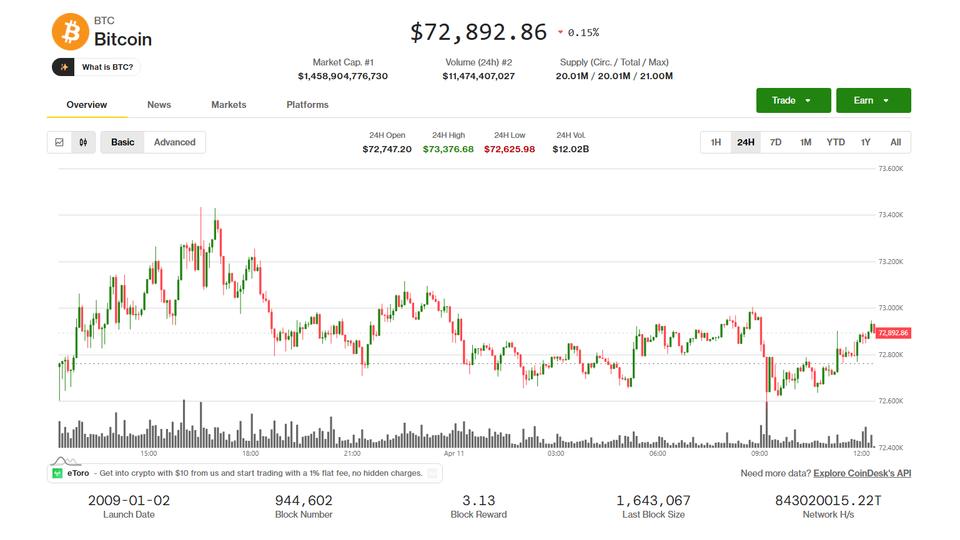
And just like that, Bitcoin is flirting with the highest weekly candle close it’s managed since January. We’re talking about a price tag inching towards $79,000, a level that just a few months ago felt like a distant dream. This isn’t just a minor uptick; it’s a consolidation that’s recaptured lost ground, fueled by a mix of institutional demand and the ever-present, albeit often opaque, geopolitical undercurrents. The market’s watching, holding its breath, as the weekly candle prepares to paint its final strokes.
What’s interesting here isn’t just the price action itself—though that’s certainly grabbing headlines—but the architectural underpinnings of this move. The ghost of US-Iran war fears, which had previously cast a pall over risk assets, is beginning to recede, at least for now, as speculative capital flows back into digital gold. On Sunday, though, the optimism was tempered by Trump’s skeptical take on Iran’s peace proposals, a reminder that these geopolitical tides are about as predictable as a Bitcoin flash crash.
Still, the chatter among analysts is decidedly bullish. Michaël van de Poppe, a well-regarded figure in the crypto analysis space, pointed to Friday’s substantial inflows into US spot Bitcoin ETFs—we’re talking nearly $630 million—as a key driver. “I don’t think this will slow down in the coming week and that’s probably why we’re seeing a relatively shallow consolidation taking place,” he noted on X. The $79,000 zone is the immediate hurdle; clear that, and the path to $86-88K and potentially $92-94K opens up. It’s a classic supply and demand play, amplified by the sheer velocity of capital entering regulated investment vehicles.
Is This ETF-Driven Rally Sustainable?
The narrative is undeniably tilted towards optimism, but that doesn’t mean the ride will be smooth. The astute observers aren’t just looking at the price chart; they’re scrutinizing the order books, hunting for what the traders call “liquidity grabs.” This is where the subtle artistry of market manipulation—or at least, strategic positioning—comes into play. Crypto Tony, a trader who keeps a keen eye on data from CoinGlass, warned about a build-up of liquidity below the current price, hinting at a potential setup where price is drawn down to absorb those positions before a reversal. It’s a dance as old as financial markets themselves: lure the eager buyers or sellers into a trap before pivoting.
JDK Analysis echoed this sentiment, describing the liquidity setup as “typically bearish.” Their observation of “fresh longs opening into the highs, while price continues to show signs of absorption - unable to push meaningfully higher despite increasingly aggressive market buying for now” paints a picture of potential overhead resistance. It’s a sophisticated game of cat and mouse, where the whales—the large holders of Bitcoin—might be setting a trap for the retail crowd chasing the rally.
The Architecture of Accumulation
What’s truly fascinating here is the evolving architecture of Bitcoin’s price discovery. We’re moving beyond purely on-chain metrics and the fringe whispers of anonymous forums. The influx of billions through regulated US spot Bitcoin ETFs has fundamentally altered the plumbing. These funds, managed by behemoths like BlackRock and Fidelity, aren’t just buying BTC; they’re creating a demand channel that’s far more predictable and, frankly, more palatable to institutional investors. This shift means that the price of Bitcoin is becoming increasingly tethered to macroeconomic factors and the steady, consistent flow of institutional capital, rather than solely to the speculative fervor of the retail crypto crowd.
This institutional embrace, however, also means that Bitcoin’s price is now more susceptible to the very forces that move traditional markets. Geopolitical events, interest rate speculation, and the overall risk appetite of the global financial system now have a more direct line to BTC. It’s a double-edged sword: greater legitimacy and capital, but also increased correlation to traditional asset classes that many crypto enthusiasts sought to escape.
“We can clearly see fresh longs opening into the highs, while price continues to show signs of absorption - unable to push meaningfully higher despite increasingly aggressive market buying for now.”
This quote from JDK Analysis perfectly encapsulates the current tension. The market wants to go up, as evidenced by the ETF inflows and the underlying desire for Bitcoin as an inflation hedge and digital store of value. Yet, there are clear signs of absorption, suggesting that sellers are present at these higher levels, potentially waiting for the opportune moment to take profits or for the market to present a more attractive entry point for their own trades. It’s a high-stakes chess match unfolding on the digital board.
So, as Bitcoin readies itself for what could be its most significant weekly close in months, it’s crucial to remember that the narrative is rarely that simple. The $79,000 mark isn’t just a number; it’s a psychological and technical barrier that, if breached decisively, could signal the start of a new upward leg. But the whispers of liquidity grabs and absorption are a stern reminder: the path to the moon is often paved with strategically placed banana peels for the unwary.
🧬 Related Insights
- Read more: Linux Copy Fail: CISA Flags ‘Insane’ Flaw on Watch List
- Read more: Bitcoin Smacks Into $73K Brick Wall—Third Time’s No Charm for ETH, SOL, DOGE
Frequently Asked Questions
What does a “weekly close” mean for Bitcoin? A weekly close refers to the price of Bitcoin at the end of the trading week, typically Sunday at 11:59 PM UTC. It’s a significant indicator for traders and analysts as it represents the culmination of all trading activity over a seven-day period and can signal future price direction.
Will the US spot Bitcoin ETFs cause the price to keep going up? The US spot Bitcoin ETFs have certainly injected a significant amount of capital and legitimacy into the market, driving up demand. While they are a bullish factor, the price of Bitcoin is influenced by many variables, including broader market sentiment, macroeconomic factors, regulatory news, and speculative trading. Continued inflows are likely to support prices, but sustained rallies are not guaranteed without other supporting factors.
What are “liquidity grabs” in crypto trading? Liquidity grabs, in the context of cryptocurrency trading, refer to market movements designed to trigger stop-loss orders or liquidate existing positions. Traders might intentionally push the price up or down to hit a cluster of buy or sell orders, thereby creating liquidity that they can then trade against, often for their own profit.