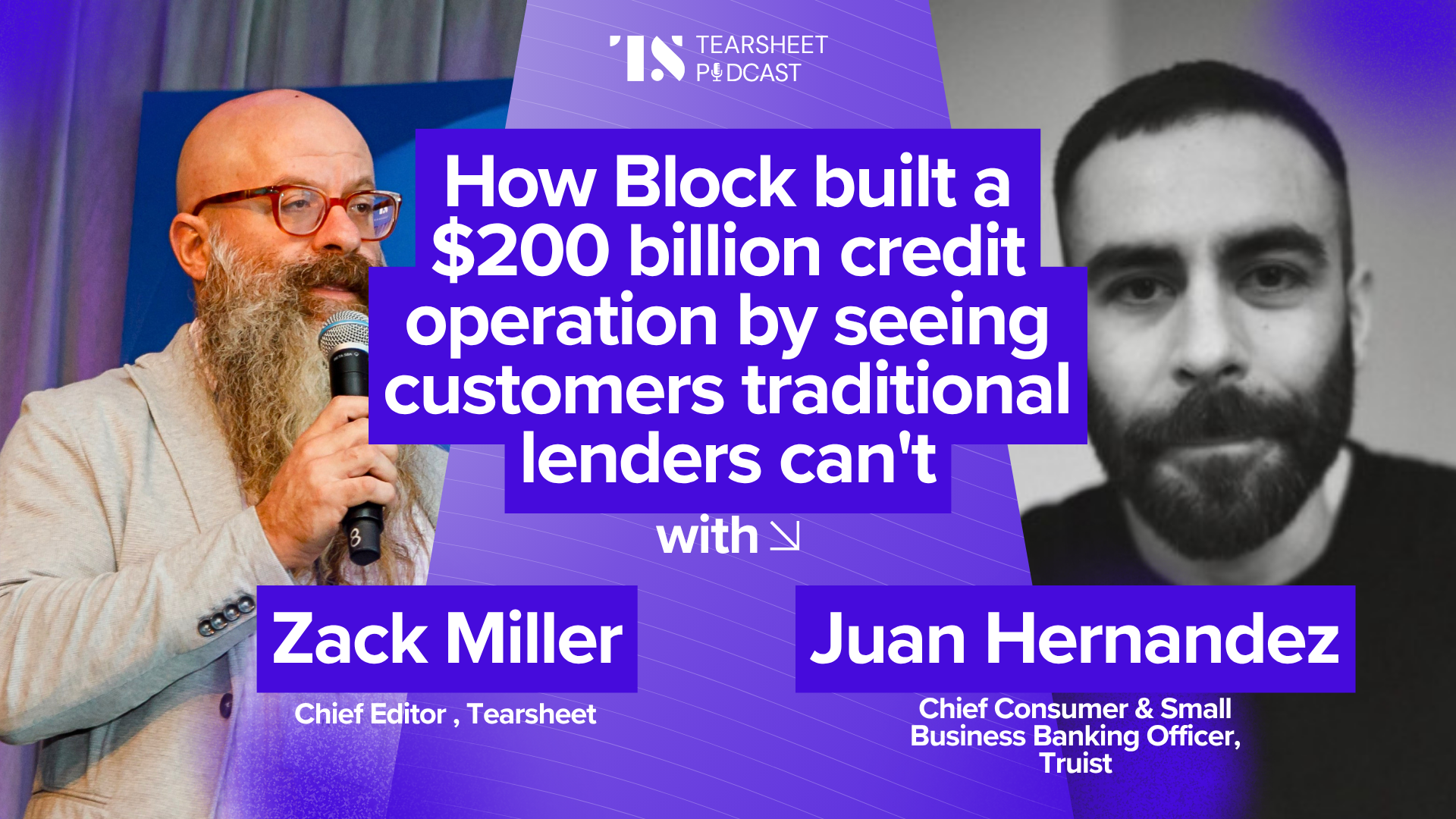
Block’s $200 Billion Credit Machine: How They See the Invisible Customer
One hundred million Americans. That’s roughly a third of the US population locked out of traditional credit systems, not because they’re inherently risky, but because the data simply isn’t there. They’re unscored, thin-filed, or worse, misrepresented by data that tells a static, outdated story. It’s a foundational flaw in how credit has been dispensed for decades, a system that demands you prove you don’t need debt by having already managed it. And into this cavernous gap, Block, under the stewardship of Juan Hernandez, has quietly built a lending behemoth, extending over $200 billion in credit through Cash App, Square Loans, and Afterpay.
This isn’t just about volume; it’s about a fundamental architectural shift. Hernandez, head of credit and underwriting, has been instrumental in architecting lending products that sidestep the archaic reliance on credit bureaus. Instead, Block leans into its first-party data — the transactional breadcrumbs native to its Square and Cash App ecosystems. Think of it as reading the detailed, real-time ledger of a user’s spending habits, cash flow, and business volume, rather than a once-a-month snapshot from a distant third party.
Why does this matter? Because traditional models are brittle. They’re built on a historical precedent that doesn’t account for the modern gig economy, the influx of immigrants, or simply young people starting out. These individuals often lack the long-form credit histories that lenders traditionally crave. So, they get trapped in a catch-22: can’t get credit because you have no credit history, and can’t build a credit history without access to credit. It’s a self-perpetuating cycle of exclusion.
Block’s approach, as articulated by Hernandez, is about capturing signals that are far more predictive of actual repayment behavior. For Square sellers, it’s about underwriting loans based on sales volume — data Block already possesses. For Cash App users, it’s about analyzing spending patterns and income flows within the app itself. This allows for more accurate risk assessment and, crucially, enables wider access at lower pricing than traditional lenders can offer to these segments.
The Anatomy of Block’s Lending Ecosystem
Block’s credit operations aren’t monolithic; they’re a sophisticated, integrated suite designed to meet varied needs across its user base. On the Square side, you have Square Loans, offering flexible repayment terms tailored to business cash flow, and a credit card product. These are designed for small to medium-sized businesses that might otherwise be shut out due to a lack of formal business credit history.
The consumer-facing products are equally diverse. Afterpay, acquired by Block, offers the familiar “Pay in 4” model with subsequent options like “Pay Monthly” at three, six, and even 24-month durations. This caters to a growing consumer preference, particularly among younger demographics, for installment payments that avoid the compounding interest typical of revolving credit.
Cash App Borrow, launched in 2019, provides short-duration loans, with other terms under active experimentation. The strategy here is clear: meet users where they are, with the repayment structures they understand and prefer. What’s particularly interesting is the new Afterpay Flex debit card, currently in pilot. It blurs the lines between debit and credit, allowing users to manage both functionalities from a single card, further simplifying financial tools.
This product philosophy is a direct response to a generational shift. Younger consumers are increasingly wary of credit cards that encourage perpetual debt cycles. They gravitate towards products with clear end dates and predictable payments, a need Block’s integrated suite directly addresses. It’s not just about offering credit; it’s about offering it in a way that aligns with evolving financial literacy and consumer behavior.
One DNA Across Brands: The Power of Functionalization
Perhaps the most compelling architectural insight is Block’s move towards a functionalized operating model. Rather than siloed, brand-specific business units, engineering, product, and risk management operate centrally. This means Hernandez isn’t just the head of lending for Square; he’s the Directly Responsible Individual (DRI) for credit across the entire Block ecosystem. This integrated approach is the engine driving the $200 billion milestone.
It allows for the efficient application of underwriting principles and data insights across Square Loans, Cash App Borrow, and Afterpay products. The risk models honed for one product can inform and improve another. This cross-pollination is incredibly efficient and powerful, enabling Block to scale its innovative credit offerings rapidly and consistently. It’s a stark contrast to the often fragmented and competitive internal structures found in many large fintech and traditional financial institutions.
The real innovation here isn’t just in the data, but in the architectural design of the organization itself. By centralizing core functions like credit risk, Block can apply learnings and best practices universally, ensuring a consistent and responsible approach to serving a historically underserved population.
A Historical Parallel: The Rise of the Credit Union
One can draw a parallel between Block’s current mission and the early ethos of credit unions. These institutions were founded on the principle of serving members who were often overlooked by commercial banks, providing access to capital based on community and shared purpose rather than purely on traditional financial metrics. Block, in its own hyper-modern, data-driven way, is acting as a de facto credit union for the digital age, using proprietary data to unlock financial inclusion.
This isn’t just about extending loans; it’s about building financial infrastructure for the unbanked and underbanked. The $200 billion figure is a proof to the scale of unmet demand and the viability of alternative underwriting models. The question now is how Block will continue to refine these models, manage the inherent risks, and ensure this expanded access doesn’t become a new form of predatory lending – a tightrope walk that will define its long-term success.
“The thesis was to underwrite based on sales volume — using data that was already native to the Square platform, more accurate than bureau data, and frictionless for the customer.”
Block’s strategy is undeniably effective, but it hinges on the responsible use of detailed customer data. As the company continues to grow its credit operations, the scrutiny on its underwriting practices, data privacy, and pricing transparency will undoubtedly intensify. The ability to offer credit to those traditionally excluded is a powerful social and economic lever, but wielding it requires constant vigilance.
🧬 Related Insights
- Read more: XRP’s Secret Shield Against the Quantum Storm — Bitcoin’s in the Crosshairs
- Read more: $471 Million Bitcoin ETF Haul: Biggest Since February, But Price Stuck?
Frequently Asked Questions
What does Block’s $200 billion credit operation entail? Block has extended over $200 billion in credit globally through products like Square Loans, Cash App Borrow, and Afterpay, primarily by using first-party data for underwriting instead of relying on traditional credit bureaus. This strategy aims to serve customers underserved by conventional lending.
How does Block underwrite loans without traditional credit scores? Block utilizes first-party transactional data native to its Square and Cash App ecosystems. This includes sales volume for businesses and spending patterns for consumers, which are analyzed through alternative underwriting models to assess creditworthiness.
Is Block’s approach to lending sustainable? Block’s success suggests significant unmet demand for credit among underserved populations and the viability of alternative data. However, long-term sustainability will depend on effective risk management, responsible data usage, and continued innovation in underwriting models.