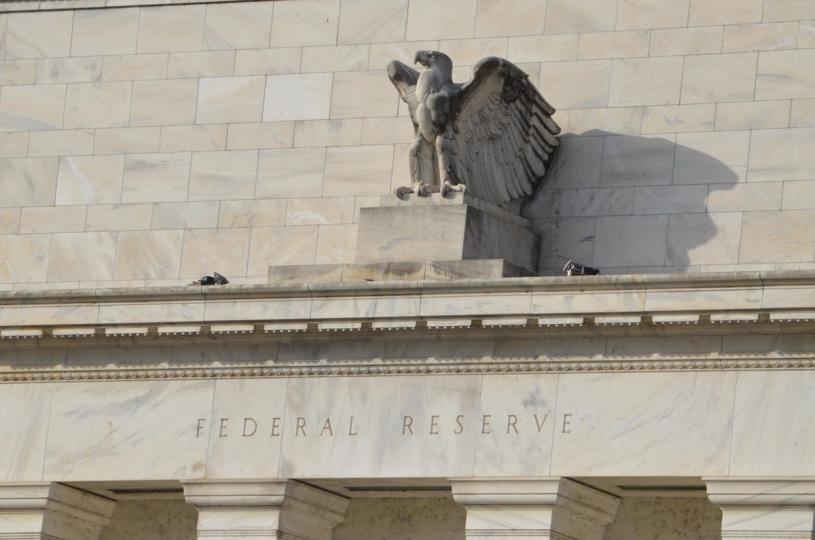
Are we in for a rate cut party or a long, dry summer of economic stagnation? The big banks, bless their ever-so-slightly-predictive hearts, are clearly leaning towards the latter. One after another, they’re ditching their forecasts for Federal Reserve rate cuts this year. Barclays, JPMorgan, and a growing chorus of others are staring at stubbornly high energy prices, fanned by geopolitical dumpster fires, and concluding that ‘higher for longer’ is the new anthem.
Here’s the thing: normally, this would be a flashing red siren for anything remotely resembling a risk asset. Think tech stocks. Think, oh, I don’t know, Bitcoin. But Bitcoin, the digital darling of defiance, is acting less like a scared rabbit and more like a seasoned contrarian. It’s shrugging off the gloomy macro outlook and inching its way upward.
Why Is Bitcoin Ignoring the Fed’s U-Turn?
Some talking heads chirp that Bitcoin is morphing into an inflation hedge. The logic? As inflation stubbornly sticks around, and real yields remain less than thrilling, investors might be piling into BTC, especially with those shiny new spot ETFs gobbling up supply. It’s a narrative. Whether it’s the truth is another question entirely.
Others, the perpetually skeptical ones (my people), aren’t buying it. They argue that Bitcoin’s upward march is less about its supposed intrinsic value and more about the general strength in the equity markets. It’s just riding the coattails of a broader risk-on sentiment, they claim. The jury’s still out, but for now, the momentum seems to be favoring the bulls.
From a market structure standpoint, we are seeing traders closely watch the $81,500 resistance level, while the CME futures gap around $84,000 remains a key zone for potential upside.
Ashish Singhal, co-founder of CoinSwitch, throws out some technical jargon that, frankly, sounds like it was pulled from a particularly optimistic fortune cookie. $81,500 resistance? $84,000 gap? It’s enough to make your head spin if you’re not already neck-deep in Fibonacci retracements and MACD crossovers. But fine. These numbers, supposedly, are guiding the near-term price action.
And the charts, oh yes, the charts. The 200-day simple moving average, that venerable arbiter of long-term trends, is sitting pretty near $83,430. A decisive push above that, apparently, is the golden ticket to further upside. Because, of course, it is.
Altcoins Ride the Bitcoin Wave (Mostly)
It’s not just Bitcoin getting a glow-up. Certain altcoins are having a field day. Toncoin (TON) is up a frankly absurd 35%. MORPHO and PENGU are also showing impressive gains. Meanwhile, Dash is doing its best impression of a deflated balloon, slipping slightly. Ether, XRP, and Solana are mostly just tagging along, proving that when it comes to crypto, Bitcoin still calls the tune.
Sentiment-wise, things are at a crossroads. The Crypto Fear and Greed Index has crept up to 50. That’s the dead center. The midpoint. The place where indecision reigns supreme. We haven’t seen this level since mid-January.
Alex Kuptsikevich, chief market analyst at FxPro, warns that the market is ripe for a turning point. He notes that while sentiment has seen brief surges, they’ve been gift-wrapped opportunities for bears to unload their positions. So, stay alert. Or, you know, do whatever it is you do when faced with confusing market signals and the vague threat of a geopolitical crisis.
My own, unsolicited take? The banks are finally admitting what many of us suspected: the inflation fight is far from over, and interest rates are going to be a sticky problem. This isn’t just a minor hiccup; it’s a fundamental shift in the economic landscape. Yet, Bitcoin marches on. It’s a fascinating dance between traditional finance’s newfound pragmatism and crypto’s persistent, almost irrational, optimism. The question isn’t if the world will change, but how and when, and whether Bitcoin is truly a hedge or just a highly speculative, volatility-prone lottery ticket dressed in digital armor.
🧬 Related Insights
- Read more: TechCrunch Disrupt 2026: Don’t Miss Out on Savings!
- Read more: Polymarket’s Stablecoin Pivot: Trading Upgrade or DeFi Trap?
Frequently Asked Questions
What are the main reasons banks are changing their Fed rate cut forecasts? Banks are revising their forecasts due to persistently high energy prices, exacerbated by geopolitical tensions, which are seen as inflationary. This suggests the Federal Reserve may need to keep interest rates higher for longer to combat inflation.
Will Bitcoin continue to rise if the Fed doesn’t cut rates? The article suggests that Bitcoin’s price action is currently decoupling from traditional expectations of Fed rate cuts. While some see it as an inflation hedge, others attribute its rise to broader market strength. Its future performance will likely depend on a complex interplay of these factors and ongoing market sentiment.
Is Bitcoin a good inflation hedge? There’s a debate. Some analysts believe Bitcoin is increasingly acting as a hedge against inflation, especially with continued inflows into spot ETFs. However, skeptics argue its current rally is more closely tied to the strength of the broader equity market than any structural shift in its role as an inflation hedge.