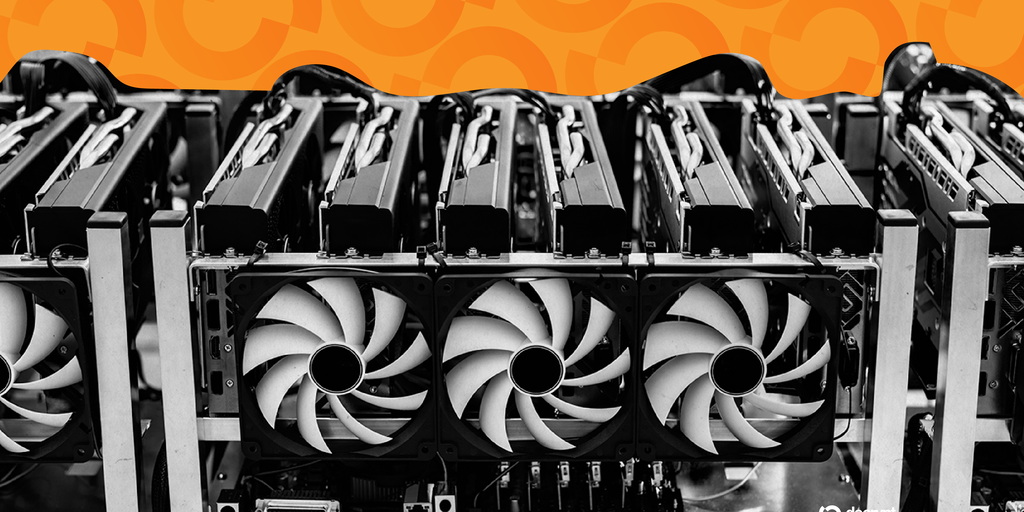
The whine of high-performance compute units. That’s the sound of Riot Platforms making its big bet pay off. For its first quarter of 2026, the company didn’t just mine Bitcoin; it rented out significant rack space to AI heavyweights, pulling in a cool $33.2 million from its nascent data center business. This isn’t just a side hustle anymore; it’s the emerging backbone of Riot’s financial strategy, offering a much-needed counterweight to the relentless volatility of the cryptocurrency market.
This transition marks a definitive inflection point, as Riot CEO Jason Les put it, officially moving the company from a pure-play Bitcoin miner to a dual-purpose infrastructure provider. The stock, RIOT, certainly felt the seismic shift, popping nearly 9% on the day and showing a more than 49% surge over the preceding month. Investors are clearly betting on this strategic recalibration.
Of course, the bread and butter—Bitcoin mining—isn’t disappearing, but it is shrinking. Revenue from this segment dipped to $111.9 million from $142.9 million in the same quarter last year. The usual suspects are to blame: a lower average Bitcoin price and a ballooning global network hash rate. Riot mined 1,473 Bitcoin during the quarter, a slight dip from the 1,530 it pulled in during Q1 2025. And while costs per coin, excluding depreciation, nudged up to $44,629, the sheer scale of operations and strategic asset sales—over $250 million in Bitcoin offloaded during the quarter, according to the company—helped cushion the blow.
Engineering revenue, which conveniently bundles infrastructure services into its definition, saw a healthy jump to $22.2 million, up from $13.9 million year-over-year. This signals that the hardware and services supporting these data center operations are also gaining traction. On the balance sheet, Riot held a considerable stash of 15,679 Bitcoin, valued at roughly $1.1 billion at quarter-end. A significant chunk, 5,802 coins, was earmarked as collateral, with $282.5 million in readily available cash, though $76.9 million of that remained restricted.
So, what’s fueling this data center boom? None other than tech titan AMD. They exercised an option to double their contracted capacity to a substantial 50 megawatts. This wasn’t a small, tentative step; it was a decisive move by one of the most demanding tenants in the AI infrastructure game. Les pointed to this expansion as proof of Riot’s ability to execute at an “institutional scale.” The 50 megawatts are now locked in with AMD, and Riot is moving fast to capitalize on what it calls a “significant, fully-approved power portfolio.”
Here’s the architectural shift that’s truly compelling: Riot isn’t just building data centers; it’s leveraging its existing, massive power infrastructure—originally intended for energy-guzzling Bitcoin miners—to serve a different, but equally power-hungry, clientele. It’s a fascinating repurposing of assets, moving from a singular focus on crypto to a diversified play that taps into the insatiable demand for AI compute. The company boasts secured power, in-house development chops, and the deep pockets needed to ride this wave, all while aiming to drive “compounding shareholder value.”
The implications here go beyond Riot’s balance sheet. It’s a narrative playing out across the digital infrastructure landscape. Bitcoin miners, facing margin compression and regulatory uncertainty, are increasingly looking for stable, recurring revenue streams that aren’t tied to the wild swings of the crypto market. High-density compute for AI workloads offers exactly that. Riot’s move, and especially AMD’s confidence in doubling down, suggests this isn’t a niche experiment. It’s a strategic pivot with the potential to redefine what a Bitcoin miner can be.
Why is Riot Platforms diversifying into data centers?
Riot Platforms is diversifying into data centers to create new, stable revenue streams that are less volatile than Bitcoin mining. The demand for AI compute power provides a significant market opportunity for their existing power infrastructure.
How does this impact the Bitcoin mining industry?
Riot’s success could signal a broader trend where Bitcoin miners seek to monetize their substantial power infrastructure beyond crypto mining. This might lead to increased competition for AI hosting contracts but also validate a more sustainable business model for the sector.
What is the significance of AMD doubling their contracted capacity?
AMD’s decision to double their contracted capacity to 50 megawatts is a strong validation of Riot’s data center capabilities and execution. It demonstrates market confidence in Riot’s ability to serve demanding, institutional clients at scale.
What are Riot’s future plans for its data center business?
Riot aims to capitalize on strong market demand with high-quality tenants by leveraging its secured power, development expertise, and financial resources to drive shareholder value through its expanding data center operations.
🧬 Related Insights
- Read more: $471 Million Bitcoin ETF Haul: Biggest Since February, But Price Stuck?
- Read more: Stablecoins Hit $315B as USDC Surges and Retail Demand Collapses
Frequently Asked Questions
What does Riot Platforms’ data center business do? Riot Platforms rents out space and power in its data centers to companies that need to house and operate high-density computing equipment, primarily for AI workloads.
Will this new data center revenue replace Bitcoin mining income for Riot? While data center revenue is growing rapidly and providing a significant boost, Bitcoin mining still represents the larger portion of Riot’s income in Q1 2026, though the gap is closing.
Is Riot Platforms stock a good investment because of this shift? This shift to a hybrid model is viewed positively by investors, as evidenced by the recent stock price surge. However, investment decisions should consider broader market conditions and company performance.