The Silence of the Network
Iran’s internet formally remained part of global routing, but user activity fell almost to zero. That points to a managed restriction on citizens’ access to the external network. Source: IODA.
But in that digital darkness, one vital financial service continued to operate without interruption: Nobitex, a cryptocurrency exchange linked to Iran’s ruling elite. We’ve compiled the available information about the platform, trying to understand how Iranian authorities use it, what investigations by analytics firms have revealed, and why, despite all these findings, the exchange is still not on OFAC’s SDN List. Spoiler alert: it’s complicated, and reeks of carefully curated opacity.
Billions in the Shadows
Nobitex isn’t some dusty corner of the crypto world. Estimates vary, sure, but analysts agree the asset flows moving through this exchange are measured in the billions. TRM Labs, for instance, clocked an observed volume of approximately $5 billion between 2025 and March 2026. And before that? Chainalysis noted asset inflows to Nobitex addresses exceeded the combined figure for Iran’s ten other largest exchanges. This isn’t small potatoes; this is the whole damn farm.
What’s more, they boast about serving some 11 million Iranians – that’s nearly 12% of the country’s population. Standard fare: spot and margin trading, yield products, liquidity pools, gift cards, even crypto-collateralized lending. For the pros, they offer up increased limits and high-speed APIs. Sounds like any exchange, right? Except it’s not.
The Currency Conduit
What truly piques interest isn’t the retail noise, but the whispers suggesting Nobitex functions as a national currency gateway. For a country effectively cut off from SWIFT, this is gold. Investigations point to Nobitex facilitating the Iranian leadership’s evasion of economic sanctions. Elliptic, in January 2026, detailed systematic USDT purchases by Iran’s central bank, totaling at least $507 million, sent “primarily” to Nobitex via a UAE broker. This is essentially a forex intervention, happening entirely outside the international banking system. It’s clever, and frankly, a bit terrifying.
Tangled Webs and Stealth Code
The founders, Ali and Mohammad Kharrazi, are linked to a powerful political and clerical family. One of their early investors? Mohammad Baqer Nahvi, VP of Safiran Airport Services, a company already OFAC-sanctioned for its role in supplying Iranian drones to Russia. Coincidence? In this game, probably not. Then you have Elliptic and Chainalysis documenting Nobitex’s connections to Hamas, the Houthis, Gaza Now, and even the sanctioned Russian exchange Garantex. It’s a who’s who of entities Washington would rather see isolated.
But here’s where it gets really interesting: Nobitex seems to have built its infrastructure from the ground up to operate under sanctions. A leak of its source code and internal docs in June 2025 revealed modules for stealth addresses, transaction batching, endpoint switching, and logic designed specifically to bypass compliance checks. A document titled “Nobitex Privacy” explicitly outlined a strategy to evade FinCEN tools and Western blockchain analytics. They weren’t just operating under sanctions; they were designed to.
A document titled “Nobitex Privacy” was also made public, explicitly describing a strategy to evade FinCEN tools and Western blockchain analytics.
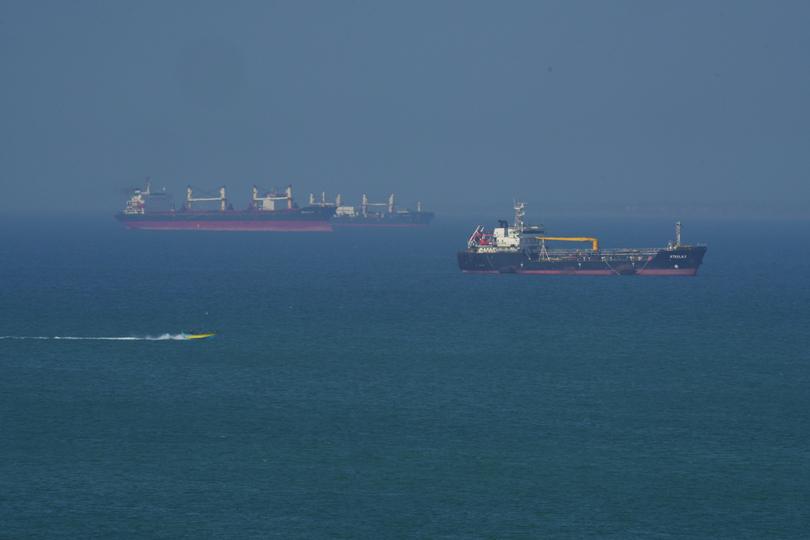
And the gravy train? In April 2026, reports surfaced that Iranian entities were charging vessel operators fees in cryptocurrency for passage through the Strait of Hormuz. This practice appears successful, suggesting digital assets will continue their use for such purposes.
The OFAC Enigma
So, why isn’t Nobitex on the SDN List, especially when compared to Garantex? Here’s the kicker. While adding them seems logical, the U.S. Treasury Department has sanctioned Iran-linked exchanges before, but those were UK-registered. Nobitex, on the other hand, is an Iranian domestic company. Crucially, on the same day Reuters dropped its investigation, OFAC clarified that Iranian digital asset exchanges are already considered blocked financial institutions, regardless of individual listing. For a physically based Iranian operation, this clarification has minimal practical effect – its core business is Iranian users and neutral foreign intermediaries. An SDN listing, however, triggers secondary sanctions against any non-U.S. counterparties worldwide. It’s a distinction with a massive difference, and it seems Nobitex is expertly playing within its boundaries.
This whole saga is a stark reminder that sanctions are a blunt instrument in a world of increasingly sophisticated digital finance. While Nobitex isn’t officially sanctioned individually, the financial ecosystem it operates within certainly is. The question isn’t if money is flowing to sanctioned entities or from sanctioned states; it’s how much, how efficiently, and who’s getting rich off it. And from where I’m sitting, it looks a lot like the latter is happening with impunity.
Is Nobitex Getting Special Treatment?
It doesn’t appear to be special treatment so much as a shrewd understanding of regulatory loopholes and Iran’s geopolitical position. By being a purely domestic entity, Nobitex sidesteps the immediate impact of secondary sanctions that would cripple a foreign-registered exchange. OFAC’s recent clarification acknowledges Iranian exchanges are effectively blocked, but the lack of individual SDN listing for Nobitex suggests a strategic decision, likely to avoid wider geopolitical fallout or perhaps to maintain a specific channel of financial oversight.
Who is Actually Making Money Here?
Several parties are likely profiting. The founders and early investors in Nobitex are undoubtedly seeing substantial returns. Iranian citizens and businesses using the platform to access global markets or circumvent local currency restrictions benefit from its services. Iran’s central bank has used it for foreign exchange interventions, a direct state benefit. And, perhaps most cynically, entities that interact with Nobitex – intermediaries, liquidity providers, and even analytics firms whose work indirectly justifies regulatory inaction – could also be profiting from this complex, sanctions-adjacent financial ecosystem.
**
🧬 Related Insights
- Read more: Bitcoin’s Two-Month Squeeze: That $62K Floor Is Cracking
- Read more: FIFA’s $5 Billion Betting Gamble: Why ADI Predictstreet’s World Cup Deal Reeks of Crypto Desperation
Frequently Asked Questions**
What does Nobitex do? Nobitex is Iran’s largest cryptocurrency exchange, offering services like spot and margin trading, yield products, and crypto-collateralized lending to millions of Iranians.
Why is Nobitex not on the OFAC blacklist? While Iranian crypto exchanges are considered blocked institutions by OFAC, Nobitex, being a domestic Iranian company, has not been individually added to the SDN List. This avoids triggering secondary sanctions against global counterparties.
Does OFAC have any control over Nobitex? OFAC has clarified that Iranian digital asset exchanges are already considered blocked financial institutions. However, without an individual SDN listing, direct enforcement and secondary sanctions against Nobitex’s global partners are limited.