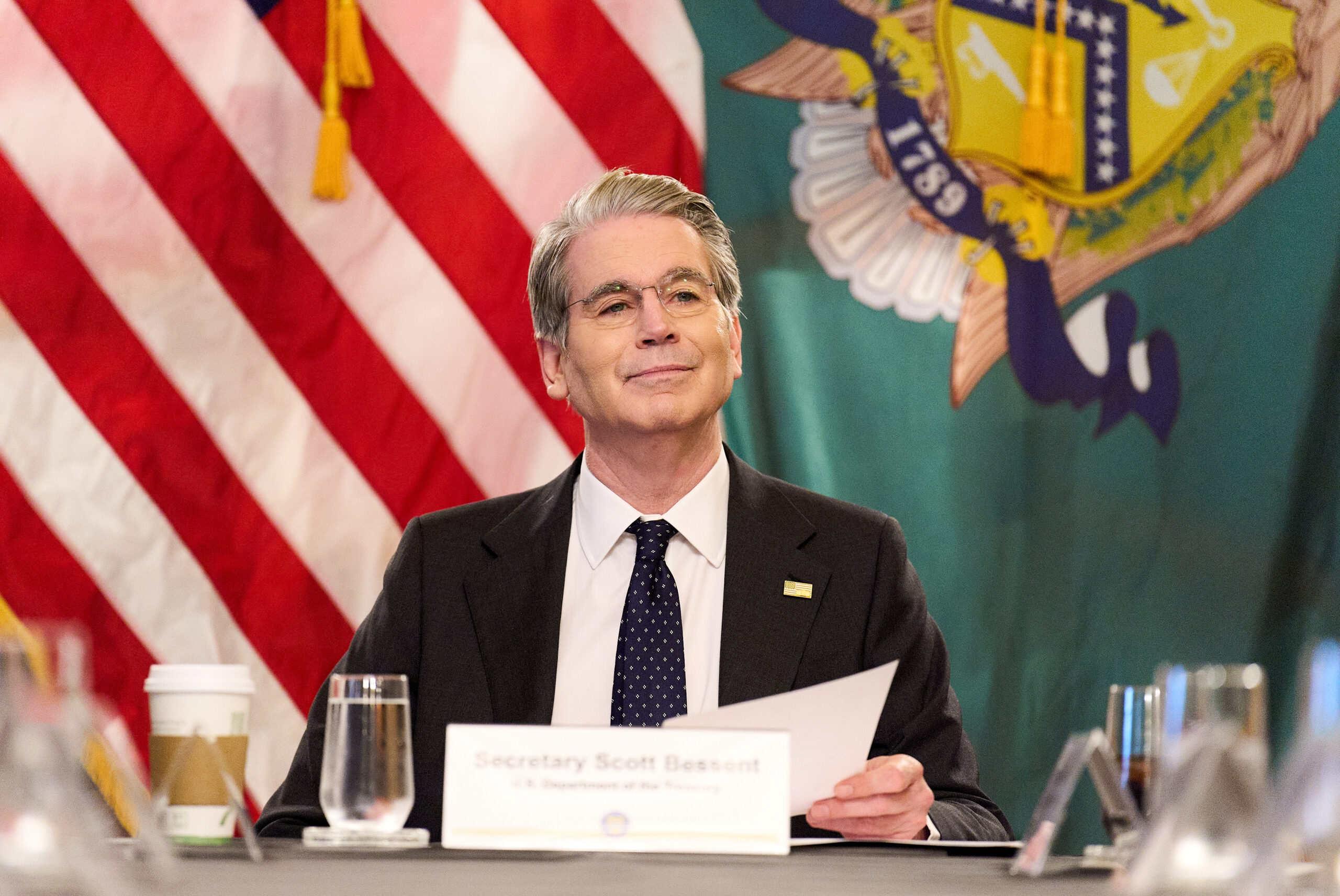
Americans are drowning in debt, and a staggering $39 trillion in outstanding debt hung over the nation as of March. Amidst this financial maelstrom, Treasury Secretary Scott Bessent is sounding an alarm, not about complex derivatives or interest rate hikes, but about something far more elemental: the allure of easy money. From lottery tickets to the ephemeral promise of a crypto jackpot, Bessent sees a dangerous siren song luring too many Americans away from genuine financial stability.
His frustration is palpable. He’s seen young men, folks with good hands meant for building, lost in the siren call of the lottery. “It drives me crazy,” he said, painting a picture of a generation chasing quick wins instead of building lasting wealth. Bessent’s vision? To replace that gamble with growth. “The best thing you can do is not play the lottery,” he declared, advocating instead for the power of investment and patient observation as it compounds. It’s a refreshingly straightforward message from a figure often associated with the stratospheric world of finance.
The Billionaire’s Backstory: From Humble Beginnings to Wall Street
This isn’t just a politician spouting platitudes. Bessent’s passion for financial literacy stems from a deeply personal place. He didn’t inherit a fortune; he built one. His childhood in rural South Carolina was marked by poverty, his father a real estate developer who’d overleveraged and lost the family’s wealth. That early brush with financial ruin clearly etched a lasting impression. He hustled from a young age, the kind of grit that’s hard to replicate in a boardroom. This history, this lived experience of financial precariousness, fuels his commitment to ensuring others don’t fall into the same traps he witnessed firsthand.
His path to Yale, and then to Wall Street, working alongside titans like George Soros on the legendary bet against the British pound, is a story in itself. Yet, even at the highest echelons, where he learned about sophisticated capital markets, his professor recalls Bessent’s fundamental interest in the “ABCs of finance.” It’s this dual perspective—mastery of complex financial instruments coupled with a deep empathy for those struggling with the basics—that makes his current focus so compelling.
“Wall Street has grown wealthier than ever before, and it can continue to grow and do well,” Bessent has peppered into various speeches over the past year, insisting that his work in the Trump administration is “focused on Main Street.”
Why is This ‘New’ Emphasis So Crucial?
Bessent’s emphasis on financial literacy might feel like a throwback, a return to fundamentals in an era of lightning-fast digital transactions and sophisticated financial instruments. But consider the context: record-high consumer debt, persistent inflation pinching household budgets, and a palpable skepticism about the economy. In this environment, the promise of easy money becomes even more potent, and the fall from grace even steeper. Bessent is essentially building a foundational firewall against financial ruin, a crucial counterpoint to the often-sensationalized narratives of overnight success.
This isn’t just about personal budgeting; it’s about systemic resilience. When individuals are financially literate, they’re less susceptible to predatory lending, less likely to fall victim to sophisticated fraud schemes that are currently plaguing community banks, and more likely to contribute positively to the economy. It’s a ripple effect that starts with a single savings account, as Thomas Fraser, CEO of First Mutual Holding Co., pointed out, suggesting that a 14-year-old starting to save could see significant growth over time. That’s the magic Bessent wants everyone to understand—the steady, predictable magic of compounding, not the fleeting thrill of a scratch-off ticket.
His approach, visiting community bankers, retirees, and schoolchildren, is a deliberate attempt to reach people where they are, to explain finance. It’s an acknowledgement that perhaps the greatest innovation in finance isn’t a new app or a faster blockchain, but simply helping people understand the power they already hold to manage their money and build their future. This focus on Main Street, on the everyday American, feels like a vital recalibration in a world that often seems obsessed with Wall Street’s next big thing.
The Bold Prediction: Financial Literacy as the Next Platform Shift
Here’s where things get truly exciting, and perhaps a bit controversial. We’re living through an undeniable AI platform shift. But I believe we’re also on the cusp of a financial literacy platform shift. Think about it. For decades, financial education has been an afterthought, a few dusty pamphlets in a high school economics class. Bessent, with his background and his current platform, is pushing it to the forefront. He’s not just talking about it; he’s integrating it into the very fabric of Treasury’s outreach. This isn’t just about individual success; it’s about creating a more economically resilient populace, a populace better equipped to navigate future financial storms. It’s a long game, yes, but one that could fundamentally alter the financial landscape for generations. Imagine a future where understanding your finances is as natural as using a smartphone. Bessent’s efforts are a crucial first step in making that vision a reality.
🧬 Related Insights
- Read more: Binance’s Spot Trading Guardrails: A Shield Against Volatility Nightmares
- Read more: Bitcoin crosses $81,000, ETH, SOL, DOGE steady as options desks bid on further price jump
Frequently Asked Questions
What is Bessent’s main message about financial choices? Bessent urges Americans to avoid “easy money” traps like the lottery and BNPL loans, instead advocating for saving and investing to build long-term wealth.
Why is financial literacy a priority for Secretary Bessent? His personal history of poverty and witnessing his father’s financial struggles fuel his passion for empowering individuals with the knowledge to manage their money effectively.
How does Bessent plan to promote financial literacy? He is actively engaging with various groups, including community bankers, retirees, and schoolchildren, through events and direct conversations to teach budgeting, saving, and debt management.