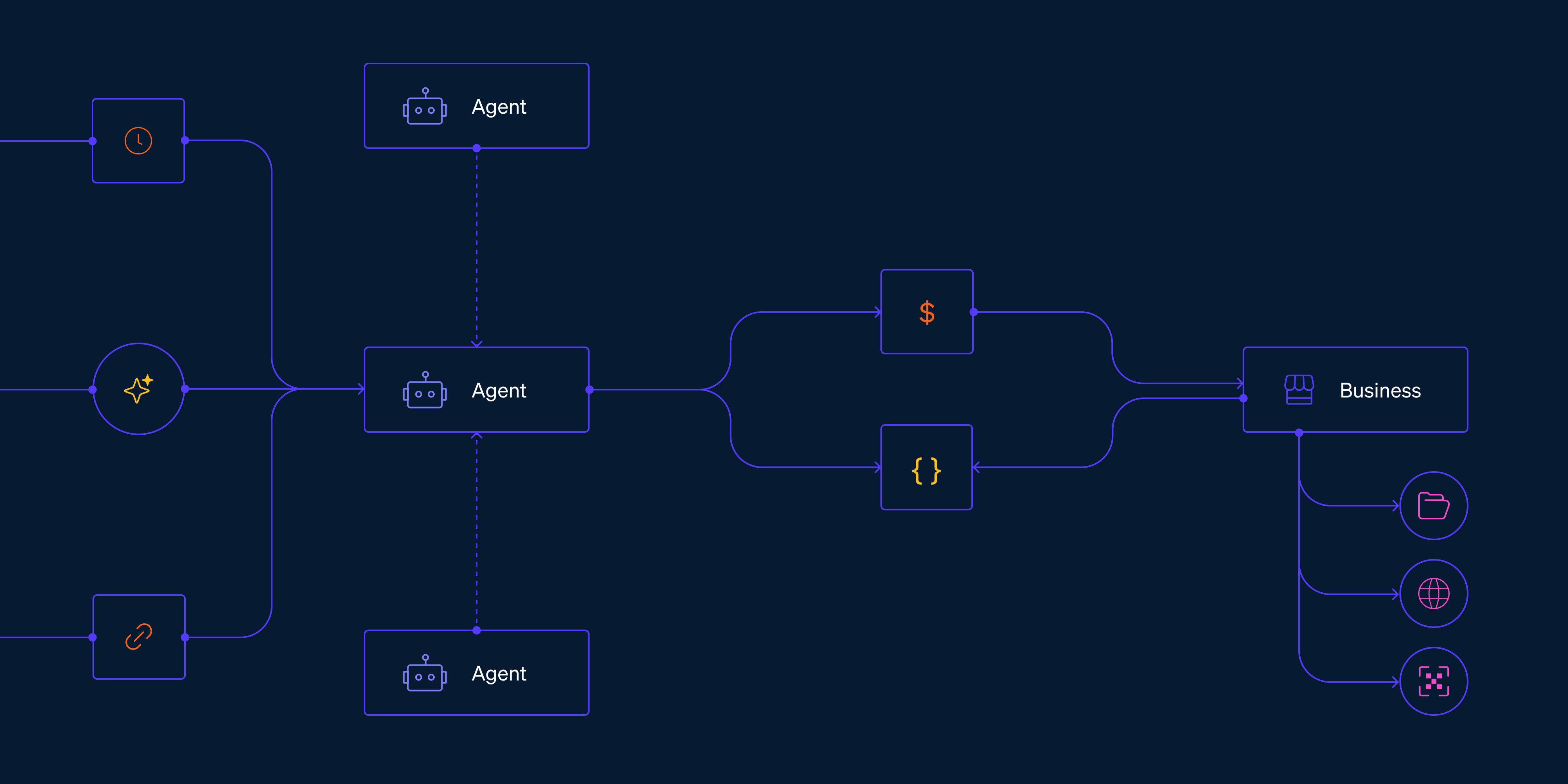
Imagine an AI, not just drafting emails or summarizing reports, but actually paying for the information it needs. It’s not science fiction anymore. Right now, deep within the sprawling digital infrastructure of Amazon Web Services, something seismic is happening: AI agents are learning to spend money. Not with credit cards, not with wire transfers, but with stablecoins. We’re talking about a fundamental platform shift, akin to the internet itself, where autonomous agents will soon be the engines of digital commerce, making purchases as naturally as they process data.
AWS announced Amazon Bedrock AgentCore Payments this week, a system cooked up with industry heavyweights Coinbase and Stripe. The goal? To equip AI agents with the ability to autonomously pay for APIs, data feeds, and all sorts of online services as they’re doing their job. This isn’t just about convenience; it’s about building a completely new layer of automated economic activity. Think of it like equipping a fleet of self-driving delivery robots with their own wallets, able to buy fuel, pay for tolls, and even order supplies without a human lifting a finger.
This new payment system use Coinbase’s x402 protocol—a smart bit of tech based on the HTTP 402 “Payment Required” code—along with wallet tech from both Coinbase and Stripe’s Privy. Preethi CN, director of AgentCore, stated with remarkable clarity: “AgentCore is designed to work with any framework and any protocol. We’ve carried that same flexibility into Amazon Bedrock AgentCore Payments. Developers don’t have to track the evolving payment protocol landscape or lock into a single standard.” It’s a promise of flexibility in a notoriously fast-changing tech world, aiming to prevent developers from having to constantly reinvent the wheel for every new AI tool they integrate.
Initially, these micropayments are set to fuel things like API calls and access to paywalled content. But the roadmap is breathtakingly ambitious. AWS envisions future AI agents booking flights, reserving hotel rooms, and even completing complex e-commerce purchases across merchant platforms. This isn’t just an incremental update; it’s about unlocking autonomous commerce on a scale we’ve only just begun to imagine. It’s like giving AI agents the keys to the digital kingdom, along with the debit card to manage its spending.
“Enterprises have been telling us the same thing: They want agents that can transact, but they can’t get past legal and compliance review,” Coinbase Head of Infrastructure Growth Brian Foster said in a statement. “AWS developers can now give their agents financial autonomy in a comprehensive managed solution. It just works.”
Coinbase is rightly trumpeting this as a major win, one of the first times a major cloud provider has integrated crypto micropayments directly into its core AI infrastructure. They point to the x402 protocol’s track record, having already processed over 169 million machine-native payments. The speed and cost-effectiveness of stablecoins, settling in milliseconds on networks like Ethereum’s Base and Solana, are a huge draw. Traditional payment systems, frankly, can’t keep up with the pace and micro-transaction needs of a world run by autonomous AI.
Is this the killer app for stablecoins? It certainly feels like it. Companies like MoonPay and Solana are also pushing similar initiatives, recognizing that stablecoins are the ideal lubricant for the gears of AI-driven economies. They offer 24/7 operation, low fees, and the speed necessary for machine-to-machine transactions. Imagine a world where your smart home AI orders groceries before you even realize you’re out of milk, or your research assistant automatically subscribes to a new academic journal the moment it’s relevant to your work. It’s happening.
But let’s be clear: this isn’t just about adopting crypto because it’s trendy. It’s about utility. The very nature of autonomous AI agents demands a payment system that’s as fast, efficient, and automated as they are. Fiat systems, with their manual processes, chargebacks, and settlement delays, are simply too clunky. This is the digital equivalent of replacing a horse and buggy with a supersonic jet.
I’ve seen my fair share of hyped technologies, but this feels different. This isn’t just another fintech innovation; it’s about re-architecting how digital value flows. It’s a fundamental shift, enabling AI to participate directly and autonomously in the global economy. The potential is staggering. We’re talking about democratizing access to complex services, lowering the barrier to entry for smaller businesses and even individuals to use sophisticated AI capabilities, all powered by a frictionless, autonomous payment layer.
The Dawn of Autonomous Commerce
This integration by AWS with Coinbase and Stripe isn’t merely an addition to Amazon Bedrock; it’s a declaration that the era of fully autonomous AI agents is not just approaching, but is actively being built. The ability for these agents to independently initiate and complete financial transactions removes a critical bottleneck, paving the way for a future where AI doesn’t just advise or automate tasks, but actively participates in and drives economic activity. This move by AWS is a powerful signal that the foundational infrastructure for this future is being laid, and it’s being built with digital currencies at its core.
Why Does This Matter for Developers?
For developers, this development is monumental. It means they can build AI agents capable of sophisticated self-sufficiency without needing to become payment processing experts. The abstraction layer provided by AgentCore Payments shields them from the complexities of traditional finance and the ever-shifting landscape of crypto protocols. This drastically accelerates the development cycle and lowers the technical bar for creating agents that can truly operate autonomously in the real world. It’s like giving them a universal remote control for commerce.
The Broader Economic Implications
Beyond the immediate technical implications, this signifies a profound shift in how value will be exchanged online. As AI agents become more sophisticated, their ability to autonomously transact will unlock new business models and services. Think of algorithmic trading that can now execute trades with real-world assets, or decentralized autonomous organizations (DAOs) that can more smoothly integrate with traditional enterprise systems. This fusion of AI, blockchain, and cloud infrastructure could redefine economic interactions, making them more fluid, efficient, and globally accessible.
🧬 Related Insights
- Read more: Colombia’s Bitcoin Mining Gamble: Renewable Energy’s Role
- Read more: Coinbase and Linux Foundation Launch x402: The Payment Protocol That Could Rewire How AI Agents Buy Stuff
Frequently Asked Questions
What does Amazon Bedrock AgentCore Payments do? It allows AI agents to automatically pay for online services like APIs and content using stablecoins, enabling autonomous transactions during task execution.
Will this replace human jobs? While automation will undoubtedly reshape the job market, this technology focuses on enabling AI agents to perform tasks and transactions autonomously, potentially creating new roles in AI management, development, and oversight, rather than a direct one-to-one replacement of existing jobs.
What are stablecoins and why are they used here? Stablecoins are cryptocurrencies designed to maintain a stable value, often pegged to a fiat currency like the US dollar. They are used for AI agent payments because they offer fast, low-cost, and reliable transactions suitable for automated, high-volume micropayments, which traditional financial systems often struggle to handle efficiently.