The flickering screen of a trading terminal cast a cool blue light on the analyst’s face, the numbers a silent proof to a seismic shift in capital flow.
Institutions, it seems, are back in the digital asset arena with a vengeance. Last week, asset managers like BlackRock and 21Shares witnessed an astounding $858 million pour into their crypto funds, marking the strongest weekly influx since late April and extending a five-week streak of positive inflows. But the headline-grabber, the unmistakable siren song of institutional demand, was Bitcoin. Over $700 million of that total landed squarely in Bitcoin products, pushing year-to-date flows to a strong $4.9 billion. Talk about a vote of confidence.
This isn’t just a blip; it’s a pattern, and according to CoinShares’ head of research, James Butterfill, the catalyst is a growing sentiment around the so-called Clarity Act. While the specifics of such legislation often get lost in the regulatory ether, its perceived positive impact is enough to unlock significant capital.
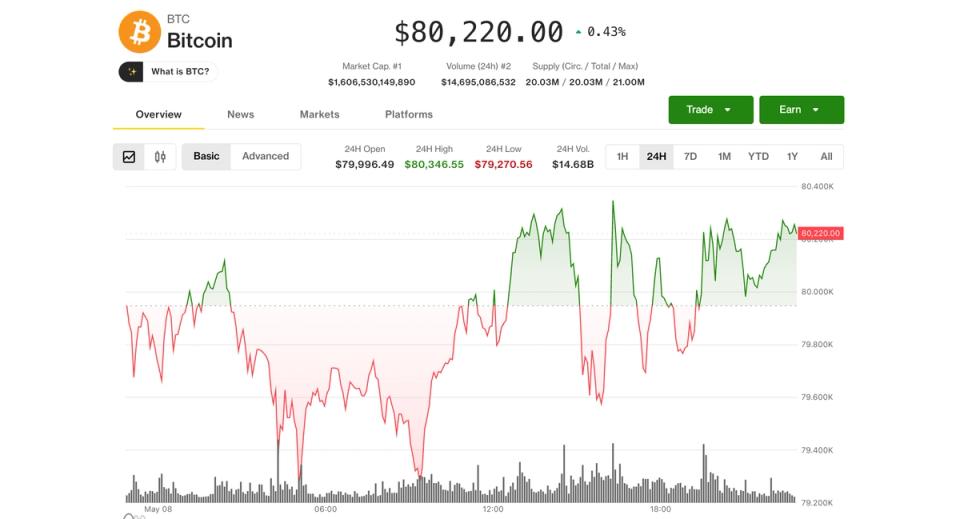
The charts, too, are singing a bullish tune. Bitcoin recently flirted with the $81,000 mark, narrowly missing the 200-day Simple Moving Average (SMA) just above $82,000. This isn’t the first time the digital gold has nudged this crucial long-term trend indicator; it’s the second near-miss in as many weeks. Crucially, prices have held above the $80,000 psychological barrier, suggesting that while bulls might be taking a moment to regroup, they certainly aren’t retreating.
What’s the Next Price Target?
Analysts are eyeing that $82,000 level with laser focus. A sustained daily close above the 200-day SMA, they contend, could be the ignition switch for the next significant upward leg. Marex analysts put it plainly: “The clean next step is a daily close above $82,000 with steady spot demand. Without that, it can chop between $79,000 and $82,000 while macro sets the tone.”
On the downside, immediate support is pegged around $80,400, with a broader demand zone identified between $78,200 and $78,600. This provides a clear range for traders to watch.
Meanwhile, the altcoin landscape is showing its own glimmers of life. The Sui blockchain’s SUI token has seen a notable surge, climbing 12% on the back of news that developers are pushing towards confidential transactions. This move into privacy-preserving payments could be a significant differentiator, especially at scale. Adeniyi Abiodun, co-founder and chief product officer at Mysten Labs, the driving force behind Sui, hinted at the ambition: “confidential transactions on Sui will be introduced this year, enabling fee-free privacy-preserving payments at scale.”
Adding fuel to the SUI fire, Nasdaq-listed Sui Group Holdings recently revealed it had staked a significant portion of its SUI tokens, effectively removing them from active circulation. This kind of supply-side squeeze, even if artificial, can often grease the wheels of a bullish momentum.
The XDC Network’s XDC token is another gainer, climbing over 10%. Other smaller tokens, like KAS, HASH, and ATOM, have also posted healthy gains of 5% or more. It’s a broad-based recovery, or at least an expansion, of interest.
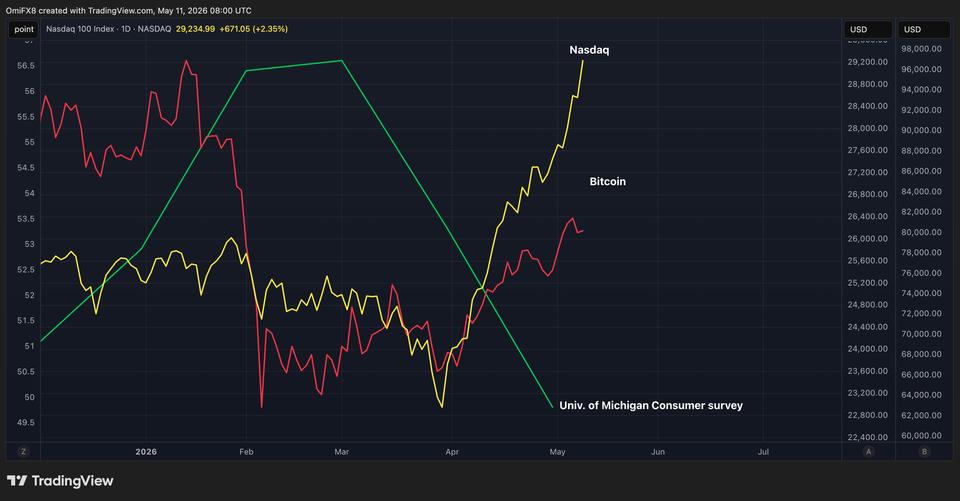
keep in mind that this crypto market resurgence is happening against a backdrop of traditional market volatility. U.S. Treasury yields have been on the rise, and geopolitical tensions—specifically around Iran and oil prices—are keeping a nervous watch on global stability. The market is clearly bifurcated, with crypto seemingly charting its own course, at least for now.
Ether’s Quiet Before the Storm?
The chart for Ether (ETH) tells a different story, one of compressed volatility. Its Bollinger Bands, a measure of price dispersion around a moving average, have tightened to their narrowest point in over two years. This period of unusual calm often precedes a significant directional move. The market is in equilibrium, yes, but equilibrium in financial markets rarely lasts. Buyers and sellers are holding their breath, and when the dam breaks, it’s often with considerable force.
This inflow into Bitcoin ETFs isn’t just about speculation; it’s about infrastructure. The success of products like BlackRock’s iShares Bitcoin Trust (IBIT) demonstrates that the market is maturing, offering traditional financial players the regulated on-ramps they’ve been craving. This isn’t merely a return to previous highs; it’s a redefinition of how institutional capital interacts with digital assets, built on a foundation of regulated products rather than offshore exchanges and opaque dealings.
The decentralization move in Bitcoin mining—where seven of the largest pools are now backing an open standard for block construction—also signals a quieter, but perhaps more profound, architectural shift. It’s a move towards greater interoperability and resilience, a technical underpinning that could strengthen the network’s long-term viability, and thus its appeal to those managing vast pools of capital.
**
🧬 Related Insights
- Read more: Bitcoin’s Unexpected Surge: Geopolitics or Senate Votes?
- Read more: Stablecoins Hit $315B, Congress Gets Close on Crypto Rules, Alabama Joins DAO Legal Club
Frequently Asked Questions**
What does the Clarity Act mean for Bitcoin?
While the specifics of the Clarity Act aren’t detailed in the source, its mention as a catalyst suggests it’s perceived to offer regulatory clarity or favorable conditions for Bitcoin and crypto investments, thereby boosting institutional confidence.
Will Ether’s tight Bollinger Bands lead to a price surge?
Historically, extremely tight Bollinger Bands indicate a period of low volatility that often precedes a significant price breakout in either direction. It signals pent-up energy in the market.
Are altcoins following Bitcoin’s lead?
Yes, some altcoins like Sui (SUI) and XDC Network (XDC) are showing strong individual performance, indicating that while Bitcoin leads the charge, there’s also growing interest in promising projects within the broader altcoin market.