The hum of servers, a constant, low thrumming in the background of a world increasingly defined by ones and zeros.
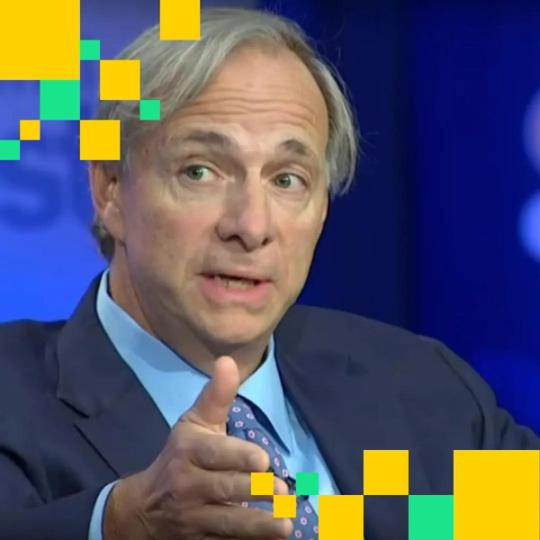
Ray Dalio, a titan of the hedge fund world and, unexpectedly, a Bitcoin investor himself, has waded into the privacy debate, and his take is a cold splash of reality for maximalists. He’s not just saying Bitcoin is volatile; he’s pointing out a fundamental architectural feature that, he believes, will keep central banks decidedly on the sidelines. The core of his argument? Bitcoin’s utter lack of privacy, a feature celebrated by some, but seen as a glaring vulnerability by those tasked with managing national treasuries. “Bitcoin lacks privacy. Transactions can be monitored and potentially controlled, which is why central banks aren’t looking to hold it,” Dalio stated on X, his words echoing through the crypto ether.
Think of the Bitcoin blockchain as a colossal, perfectly lit ballroom. Every single movement, every waltz, every stumble, is visible to anyone peering through the floor-to-ceiling windows. Every transaction, from the smallest flutter to the grandest transfer, is etched onto this public ledger for all time. Block explorers, those digital magnifying glasses, allow us to track coin flows with astonishing precision, even if the wallet addresses themselves are just digital pseudonyms. While it’s not like seeing someone’s name and address plastered next to their cash, analytics firms and law enforcement can, and do, piece together the puzzle, often linking these pseudonymous transactions back to real-world entities. It’s like having a detailed CCTV feed of every financial interaction, a level of surveillance that’s simply antithetical to the discreet, opaque operations central banks are accustomed to. Imagine trying to conduct delicate monetary policy when your every move is broadcast live on a global stage. It’s a non-starter.
This transparency, a bedrock principle for many in the crypto space, becomes a thorny issue for institutional players. At Consensus Hong Kong, the consensus among participants was clear: widespread institutional adoption of blockchain technology hinges on strong privacy features, especially for the gargantuan sums that large corporations and governments deal in. The market, in a way, seems to be whispering this truth too. Zcash, a coin built with privacy at its core, has seen astronomical gains, while Bitcoin, the pioneer, has languished. It’s a quiet signal, but a potent one: privacy, it turns out, has a price tag.
Beyond the immediate concern of central bank adoption, Dalio also highlights structural issues that gnaw at Bitcoin’s claim as a premier reserve asset. It’s not just about privacy; it’s about independence. He points to Bitcoin’s unnerving habit of mirroring the choppy seas of tech stocks, particularly the Nasdaq. This isn’t the behavior of a safe harbor, a true store of value that weathers economic storms. Instead, it’s acting more like a high-stakes tech bet, riding the coattails of innovation and crashing when the market sneezes. The data backs this up: a 90-day correlation coefficient of 0.89 with the Nasdaq means that nearly 79% of Bitcoin’s price gyrations can be attributed to its relationship with tech stocks. That’s not exactly the independent resilience one seeks in an asset meant to preserve wealth through turbulent times.
Then there’s the sheer scale. Gold, the ancient king of reserve assets, is deeply entrenched, widely dispersed, and exists outside the ephemeral glow of any single digital system. Bitcoin, by comparison, is a relative newcomer, a smaller pond that can be more easily agitated by significant market forces. Dalio’s assertion is that these factors collectively diminish Bitcoin’s potential as a global reserve asset, despite the growing influx of institutional capital. “Ultimately, gold is more widely held, deeply established, and still plays a central role in the global system,” he concludes, a sentiment that many traditional finance heavyweights would readily endorse. Dalio’s preference for gold over Bitcoin isn’t new, but his articulation of why resonates with a fundamental skepticism about digital assets entering the hallowed halls of central banking.
Bitcoin’s transparent ledger, once lauded as a revolutionary feature, is now being framed by one of the world’s most respected investors as a barrier to its ultimate adoption by the very institutions that could legitimize it on a global scale. It’s a fascinating paradox, one that speaks volumes about the evolving landscape of digital assets and their place in the established financial order.
Why Central Banks Are Wary of Public Ledgers
Dalio’s critique hits at the heart of how central banks operate. Their decisions, their reserves, their very stability are built on a foundation of controlled information. A public, immutable ledger like Bitcoin’s presents an existential challenge to that control. Imagine the Federal Reserve or the European Central Bank having to explain their gold reserves down to the last gram, viewable by anyone, at any time. It’s simply not how these institutions function, nor is it how they believe they can maintain the trust and stability required for their mandates. They operate in shadows of confidentiality, using opaque mechanisms to manage economies. Bitcoin throws open the curtains.
Bitcoin vs. Gold: A Store of Value Showdown?
Dalio’s comparison to gold is instructive. Gold’s value isn’t just its scarcity; it’s its history, its physical tangibility, and its deep integration into global trade and cultural value systems for millennia. It’s an asset that exists independently of any single network or protocol. Bitcoin, while innovative, is still tethered to the digital realm and, as Dalio notes, increasingly to the fortunes of the tech sector. For a central bank seeking an ultimate safe haven, a hedge against systemic risk, the historical, physical, and independent nature of gold remains a formidable advantage.
🧬 Related Insights
- Read more: Crypto’s Big Secret: Why Traders Are Dodging Your Prying Eyes
- Read more: Strategy Pauses Bitcoin Buys Ahead of Earnings
Frequently Asked Questions
What does Ray Dalio think about Bitcoin’s privacy? Ray Dalio believes Bitcoin lacks privacy because its transactions are publicly monitorable, which he argues deters central banks from adopting it.
Is Bitcoin correlated with tech stocks? Yes, data indicates a high correlation between Bitcoin and tech stocks like the Nasdaq, suggesting Bitcoin often acts as a risk-on asset rather than an independent store of value.
Why might central banks avoid Bitcoin? Dalio’s reasoning centers on Bitcoin’s transparency, making transactions traceable, and its correlation with volatile tech stocks, which makes it unsuitable as a stable reserve asset compared to gold.